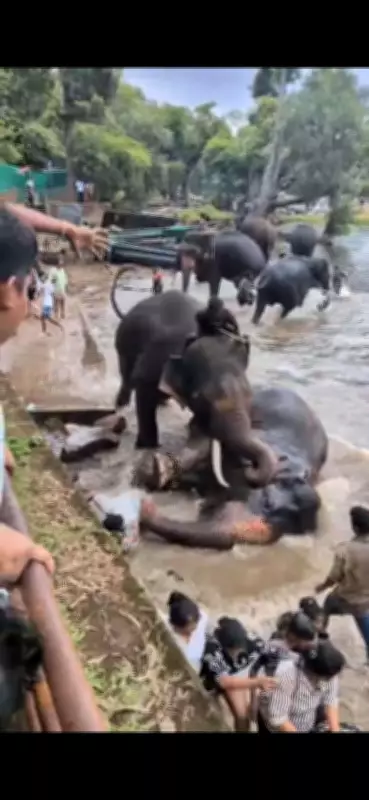
Nearly a month after the tragic incident at Dubare Elephant Camp in Kodagu, the Karnataka Forest Department has ordered a comprehensive overhaul of tourist management and elephant-handling practices across all 14 elephant camps in the state.
New Standard Operating Procedure
As part of the revamp, the department has notified a detailed Standard Operating Procedure aimed at transforming the camps from close-contact tourist attractions into regulated eco-tourism and conservation education centres. The new guidelines place a strong emphasis on public safety, elephant welfare, and emergency preparedness.
Contrary to the popular perception that elephant camps are recreational destinations, the SOP makes it clear that they are not entertainment venues and requires visitors to maintain a safe distance from elephants at all times. Activities that were once popular among tourists — including touching, feeding, bathing elephants, and taking selfies close to the animals — have now been completely prohibited.

The SOP, a copy of which was accessed by TOI, states: “The purpose of allowing visitors to these camps is conservation education, awareness and not direct interaction with the elephants.”
Three-Tier Safety Zoning System
Among the key features of the protocol is the introduction of a three-tier safety zoning system, demarcating separate areas for visitors, forest staff, and elephant handlers. “Public shall be restricted to designated ‘green zones’ surrounded by barricades. No visitor shall be allowed to go out of the green zone. This will be followed by ‘amber zone’ where department officials, emergency response teams and operational support staff are allowed to enter. Beyond these, will be the ‘red zone’ where only mahouts, kavadis, veterinarians and authorised forest officials will be allowed,” it states.
Bathing, feeding, tethering, veterinary care, elephant movement, loading and unloading, and active handling of elephants will be carried out exclusively within the red zone, which will be secured through barricades and physical separation. The SOP also mandates CCTV surveillance of critical areas to monitor violations and detect any attempt to cross safety barriers.
Viewing Distance and Elephant Categories
The protocol prescribes a minimum viewing distance of 10 metres between visitors and elephants wherever feasible. Not more than 10 elephants can be displayed during any public session, and only those classified as “Green Category” — animals assessed as calm, healthy, and responsive to commands by veterinarians, mahouts, and camp authorities — can be presented before visitors.
Elephants showing signs of aggression, stress, illness, fatigue, musth, or behavioural uncertainty will be barred from public viewing. Daily behavioural assessments will be mandatory before every visitor session.
Bathing Activities and Visitor Caps
The guidelines place special emphasis on bathing activities, categorising them as high-risk operations. Tourists will only be allowed to observe from designated galleries or viewing points and will be prohibited from entering rivers, bathing areas, or elephant movement corridors. It also mandates a weekly closure day for all camps, preferably Tuesdays.
The department has introduced visitor caps through a time-slot-based entry system and detailed emergency response protocols. “Each visitor batch shall enter, receive a safety briefing and pass through the approved Green Zone route, view elephants from the designated point and exit before the next batch is brought in,” the SOP states.
The guidelines recommend batches of 50 visitors, with each session lasting between 45 and 60 minutes. However, deputy conservators of forests have been empowered to modify these limits depending on available space, river conditions, staff strength, and crowd behaviour. All camps will be required to maintain first-aid facilities, ambulance tie-ups, evacuation plans, and trained rescue personnel to handle emergencies.