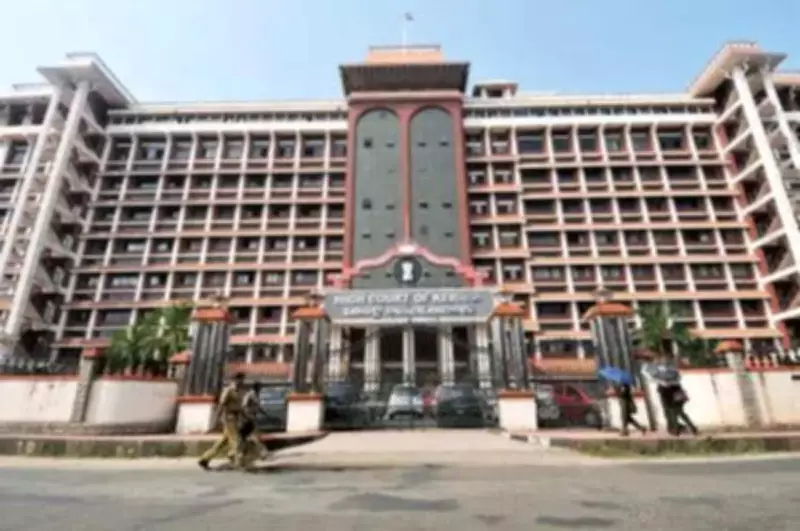
The Kerala High Court has set aside part of a single bench order that directed the state government to enhance the honorarium of pre-primary teachers and ayahs to Rs 27,500 and Rs 22,500, respectively. A division bench comprising Justice Anil K Narendra and Justice S Muralee Krishna delivered the verdict while considering appeals filed by the state government challenging the single bench directive.
Court's Directive to Government
The division bench directed the government to formulate the service conditions of pre-primary teachers and ayahs within four months, as ordered by the single bench. Additionally, the court instructed the state government to fix their honorarium on an ad hoc basis within a period of two months. The single bench had originally ordered the enhanced honorarium to be effective from March 2025 and disbursed from April 2025.
Background of the Case
In an earlier round of litigation in 2012, a division bench had directed the government to frame service rules for these teachers and ayahs. The court had also suggested payment of Rs 5,000 and Rs 3,500, respectively, as an interim measure. However, no action was taken by the government, which led to a second round of litigation. In this subsequent case, the single bench fixed the honorarium on an ad hoc basis pending formulation of service conditions, prompting the state government to file appeals.

Court's Observations
While considering the appeals, the division bench observed that the fixation of pay and allowances of government servants falls within the domain of the government. A writ court can grant such relief in exercise of its extraordinary jurisdiction only in exceptional circumstances. The court further noted that it is not an expert body to determine payments to employees, as such an exercise requires consideration of several aspects, including pay parity, the nature of work performed, and inflation. Therefore, the single bench ought not to have fixed the honorarium, it held.
At the same time, the High Court noted that despite the earlier division bench order issued in 2012 directing the formulation of service conditions for pre-primary teachers and ayahs, the government had failed to comply with the directions for several years. The court remarked, “It is a classic example of how the state machinery can make a particular class of employees run pillar to post seeking redressal of their grievance for fixation of pay and other service conditions by adopting various delay tactics and bureaucratic laziness, though the incumbents obtained a judgment in their favour from the court.”