

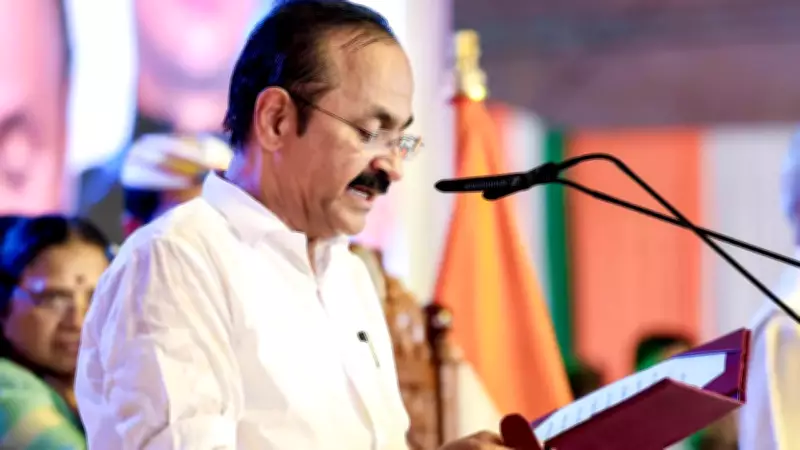
The V D Satheesan-led United Democratic Front (UDF) government in Kerala has decided to repeal the Kerala Land Assignment (Amendment) Act, 2023, and the associated 2025 Rules. In a parallel move, the government will establish an independent state vigilance commission headed by a sitting High Court judge. These two measures, among the boldest in the government's 'Vision 2031' policy document, signal a sweeping political and administrative reset with far-reaching implications for the state's high-range regions and anti-corruption framework.
Cabinet Decisions and Vision 2031
The decisions were taken during the new government's cabinet meeting on Wednesday. The 'Vision 2031' document, accessed by the Times of India, promises a 'permanent solution with retrospective effect' by invoking powers under Section 7(1) of the Kerala Land Assignment Act, 1961. This includes resolving issues related to construction restrictions that have long plagued the high-range areas.
Background of the Amendment
The previous Left Democratic Front (LDF) government had introduced the 2023 amendment, which inserted Section 4A into the Kerala Land Assignment Act, 1960. This provision allowed the government to regularize violations of patta conditions and permit alternative land use in assigned lands under prescribed conditions. The 2025 rules operationalized this law to regularize old violations in patta land, particularly in high-range districts like Idukki, where land disputes, commercial construction freezes, and settlement issues had remained unresolved for decades.

The previous government defended the amendment as a 'humanitarian intervention aimed at settlers and residents trapped in legal uncertainty because of historic restrictions on land use.' Critics, however, argued that the framework could pave the way for large-scale regularization of illegal constructions and unscientific land use in ecologically fragile high-range regions.
Environmental Concerns and Political Significance
Welcoming the repeal, environmentalist Sridhar Radhakrishnan stated, 'The 2023 amendment was vulnerable to manipulation on the ground, including encroachments and unauthorized as well as unscientific land use. It carried the potential for future misuse.' The repeal gains political significance because the 'Vision 2031' document proposes some of the most pro-settler relaxations seen in Kerala's high-range policy in decades.
The new vigilance commission, headed by a High Court judge, is expected to strengthen anti-corruption mechanisms in the state. The government's reset aims to address long-standing issues while ensuring ecological balance and legal clarity in the high ranges.
About the Author
KP Sai Kiran is an Assistant Editor with The Times of India, based in the Thiruvananthapuram bureau, where he has been working since 2011. Over the years, he has reported from New Delhi and Kerala, covering subjects ranging from crime and courts to governance and public policy.






