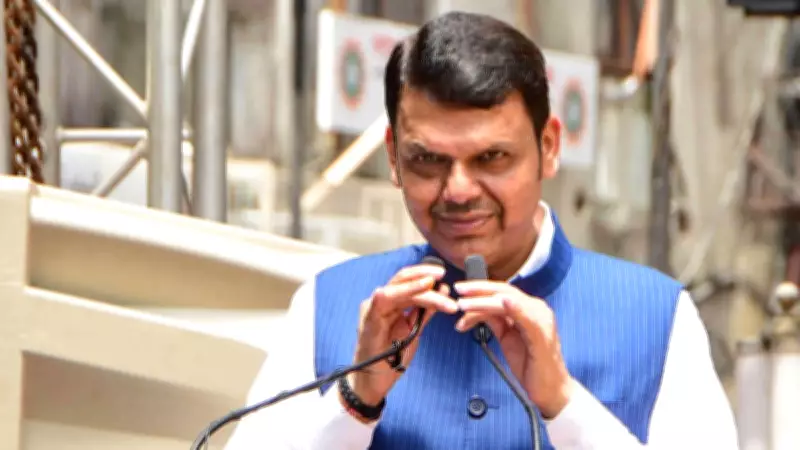
Maharashtra Deputy Chief Minister Devendra Fadnavis announced on Saturday that the Centre has approved the state's stringent anti-paper leak bill, a move aimed at curbing rampant examination malpractices in the state. The bill, which was passed by the Maharashtra legislature earlier this year, will now become law after receiving the President's assent.
Fadnavis Confirms Centre's Green Light
Speaking to the media in Mumbai, Fadnavis stated, "The Union government has given its nod to our anti-paper leak bill. This is a historic step towards ensuring transparency and fairness in examinations." He added that the legislation will serve as a strong deterrent against organized rackets involved in leaking question papers.
The bill, officially titled the Maharashtra Prevention of Unfair Means in Examinations Bill, 2026, proposes a maximum punishment of 10 years imprisonment and a fine of up to Rs 1 crore for those found guilty of leaking question papers or tampering with answer sheets. It also covers offenses related to impersonation, cheating, and the use of unfair means during recruitment exams, board exams, and entrance tests conducted by state bodies.

Key Provisions of the Bill
The legislation mandates the setting up of special fast-track courts to try cases related to paper leaks, ensuring speedy justice. It also imposes a minimum punishment of five years for first-time offenders and makes the crimes non-bailable. Additionally, organizations found complicit in malpractices can face cancellation of licenses and blacklisting.
According to government estimates, over 500 cases of exam malpractices were reported in Maharashtra in the last three years, affecting lakhs of students. The new law aims to address these concerns by creating a robust legal framework.
Political Reactions and Speculation
The announcement comes amid speculation that the Centre's approval might have been expedited due to the upcoming state assembly elections. Opposition parties, however, have claimed that the bill is a mere political gimmick. Congress leader Vijay Wadettiwar said, "The government should focus on improving the quality of education rather than just punitive measures." Fadnavis dismissed such criticism, saying, "We are committed to ensuring a level playing field for all students."
The bill has been praised by student organizations and academicians. Dr. Sunil Deshmukh, a professor at Mumbai University, called it "a long-overdue reform" that will restore confidence in the examination system.
Impact on Examination System
Experts believe that the strict provisions will deter unscrupulous elements. However, implementation remains a challenge. The state government has announced plans to deploy advanced technology, including AI-based surveillance, in examination centers to prevent leaks.
Fadnavis emphasized that the government will not tolerate any compromise on merit. "We have a zero-tolerance policy against paper leaks. This law will ensure that honest students are not at a disadvantage," he said.