The Maharashtra state government has recently notified the ‘Maharashtra Right to Information (RTI) Rules, 2026,’ introducing sweeping procedural changes to the implementation of the Right to Information Act, 2005. These changes have sparked concerns among transparency activists and opposition leaders about potential restrictions on citizens seeking information from public authorities.
Key Provisions of the New Rules
One of the most significant provisions is a cap that restricts RTI applications to a single subject and generally limits requests to 150 words. Applicants seeking information on multiple issues will now be required to file separate applications for each subject. The new rules also mandate the submission of a self-attested copy of a photo identity document proving Indian citizenship along with every RTI application. Public Information Officers have been empowered to return applications if identity proof is not attached.
Fee Structure Revision
The fee for filing an application has been raised from Rs 10 to Rs 30. Charges for photocopies, digital copies, and scanned documents have increased from Rs 2 to Rs 5 per page. First and second appeals, which previously cost Rs 20 each, will now attract fees of Rs 50 and Rs 100, respectively. Charges for information were also revised, including Rs 50 per hour for inspection of records after the first free hour, and postal charges for bulky information exceeding Rs 50.

Online Information and Repeated Requests
The rules further state that information already available on official government websites may not be certified separately by Public Information Officers, who can instead direct applicants to access it online. Another provision specifies that repeated RTI requests seeking information already supplied earlier may be disposed of by referring to previous correspondence.
Exemptions on Personal Information
The notification also elaborates on exemptions relating to ‘personal information,’ stating that information unrelated to public activity or public interest, or which may amount to an unwarranted invasion of privacy, can be denied unless a larger public interest is established. The burden of proving such public interest, the rules say, will lie with the applicant.
Compliance and Electronic Communication
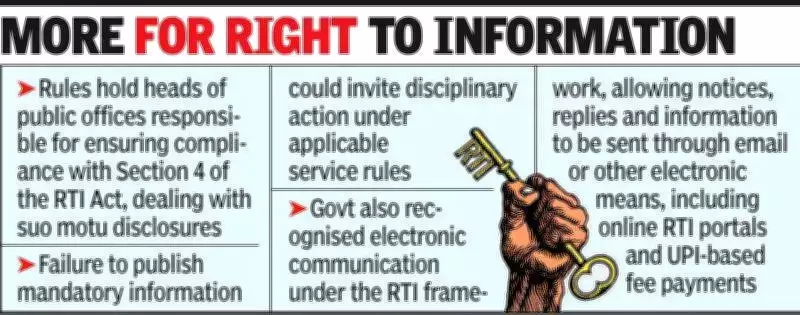
The rules hold heads of public offices responsible for ensuring compliance with Section 4 of the RTI Act, dealing with suo motu disclosures. Failure to publish mandatory information could invite disciplinary action under applicable service rules. The government has also recognised electronic communication under the RTI framework, allowing notices, replies, and information to be sent through email or other electronic means, including online RTI portals and UPI-based fee payments.
Hearings and Appeals
The rules provide for physical and video conference hearings before the State Information Commission and empower the commission to dismiss appeals in cases where appellants repeatedly remain absent during hearings. The notification supersedes earlier RTI rules framed by the state government.