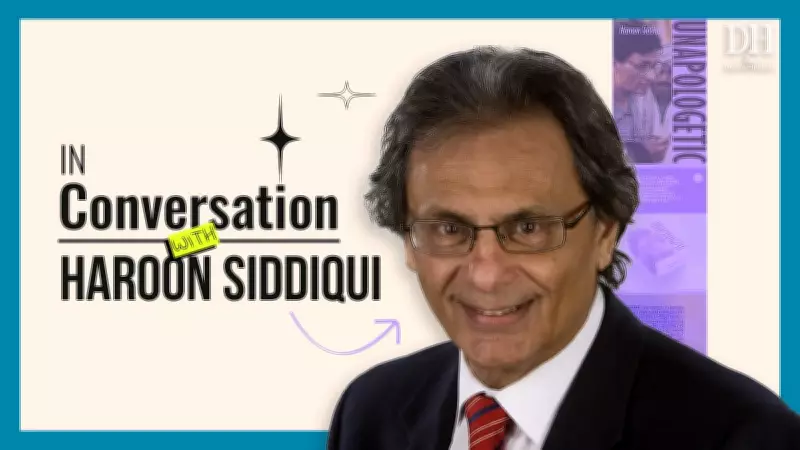
In a thought-provoking interview, veteran Canadian journalist and author Haroon Siddiqui delved into the intricate dynamics of migration, identity, and religion in a multicultural world. Siddiqui, a former editorial page editor of the Toronto Star, shared his insights on how societies can navigate the challenges and opportunities presented by increasing diversity.
The Changing Face of Migration
Siddiqui noted that global migration patterns have shifted dramatically over the past few decades. "Today, we see more people moving across borders than ever before, driven by conflict, climate change, and economic disparity," he said. According to the United Nations, the number of international migrants reached 281 million in 2020, a figure that continues to rise. Siddiqui emphasized that this trend is reshaping national identities and forcing countries to reconsider their policies on integration and citizenship.
Identity in a Multicultural Context
When asked about the concept of identity, Siddiqui argued that it is not a zero-sum game. "People can hold multiple identities simultaneously – they can be proud of their heritage while embracing their new homeland," he explained. He pointed to Canada as a successful example of multiculturalism, where official policies encourage cultural retention alongside civic integration. However, he cautioned that identity politics can be divisive if not managed carefully. "The key is to foster a sense of belonging for all, without forcing assimilation," Siddiqui added.

Religion and Public Life
Religion, Siddiqui noted, remains a powerful force in the lives of many migrants. He cited a 2018 Pew Research study showing that 86% of immigrants in Western countries report that religion is very important to them. "Religious identity often becomes more pronounced in a new country, as it provides a sense of community and continuity," he said. However, he warned against the politicization of religion, which can lead to exclusion and conflict. "Secularism must be inclusive, not hostile to faith," Siddiqui asserted, calling for policies that accommodate religious diversity while upholding human rights.
The Role of the Media
As a journalist, Siddiqui highlighted the media's role in shaping perceptions of migration and religion. "Too often, coverage is sensationalized, focusing on crime or extremism," he stated. He advocated for more nuanced reporting that reflects the everyday lives of migrants and their contributions to society. Siddiqui also stressed the importance of diverse newsrooms to ensure a variety of perspectives. "Media must reflect the communities it serves, otherwise, it risks perpetuating stereotypes," he added.
Lessons for the Future
Siddiqui concluded with a call for empathy and understanding. "Migration is not a problem to be solved, but a reality to be managed with compassion and wisdom," he said. He urged policymakers to invest in integration programs, language training, and anti-discrimination measures. Citing data from the OECD, he noted that migrants are 30% more likely than the native-born to start a business, highlighting their economic contributions. "If we get this right, multiculturalism can be a source of strength, not division," Siddiqui affirmed.