

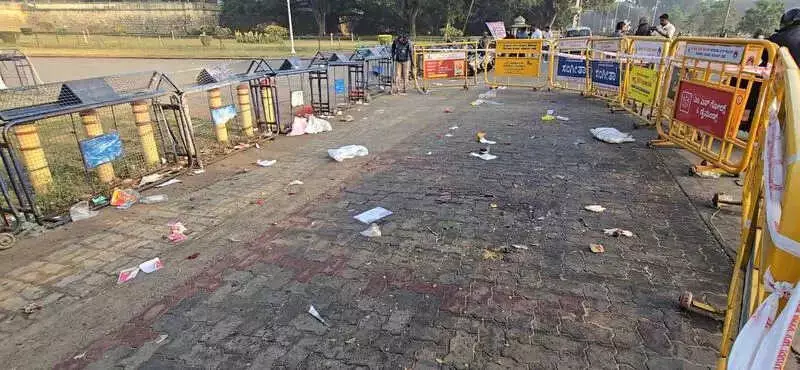
Mysuru Hydrogen Cylinder Blast Ignites Public Safety Debate
A recent hydrogen gas cylinder explosion in Mysuru has triggered widespread alarm, prompting activists and tourism industry representatives to demand stringent safety measures in public spaces. The incident has highlighted what they describe as a dangerous and common practice: the on-site filling of balloons with hydrogen gas at various events and gatherings.
Rising Incidents Prompt Calls for Immediate Ban
Concerned citizens point out that this is not an isolated event. At least three similar incidents involving hydrogen balloons have been reported recently in the Mysuru and Mandya districts. In the broader old Mysuru region, two such balloon-related episodes have come to light in quick succession. This pattern of accidents has led to a unified demand for authorities, particularly the police, to establish and enforce a clear protocol governing the use of hydrogen for inflating balloons. Many are calling for an outright ban on the hazardous practice of spot-filling.
Activist Bhamy V Shenoy starkly criticized the prevailing attitude towards safety. He stated that Thursday night's explosion is a direct result of existing security flaws in public areas. "Government agencies are not serious about enforcing safety norms in public places. This explosion makes that evident," Shenoy said. He expressed pessimism, adding, "The tragedy is that even after such incidents, a foolproof system to secure the public will not be implemented."

Palace Security System Under Scrutiny
The blast has also turned the spotlight on the security infrastructure at one of Karnataka's prime tourist attractions: the Mysuru Palace. BS Prashanth, president of the Federation of Organisations and Associations of Mysuru (FOAM), urgently called for the state government to revamp and upgrade the palace's security system. He warned that even a minor incident could severely impact tourist footfall.
"Despite lakhs of people visiting the palace every day, there is no dedicated ambulance or fire vehicle stationed there. The state government must come out with an action plan to address this," Prashanth emphasized. He also raised a fundamental question about vendor management: "The basic issue is how street vendors are allowed inside the palace premises? The system needs repair."
Echoing the need for stricter enforcement, former corporator KV Mallesh urged the government to prohibit all kinds of explosives in public places. He advocated for the Mysuru City Corporation (MCC) and district administration to not only rigorously implement public safety laws but also create designated vendor zones for street vendors. Furthermore, he stressed the importance of conducting safety awareness campaigns targeted at these vendors.
The collective message from Mysuru's civic society and business stakeholders is clear: reactive measures are no longer sufficient. Proactive, systematic changes in safety protocols and security infrastructure are imperative to prevent future tragedies and protect both residents and the vital tourism economy.






