NGT Committee Reveals Critical Deficiencies at Kullu MRF
A joint committee constituted by the National Green Tribunal (NGT) has exposed major violations in solid waste management at Kullu’s material recovery facility (MRF) near Nehru Park, warning that the site poses a serious threat to the environment and public health. The committee, comprising representatives of the Central Pollution Control Board (CPCB), Himachal Pradesh State Pollution Control Board (HPSPCB), and the district administration, found the facility functioning in gross violation of prescribed norms.
Facility Operating Without Mandatory Authorization
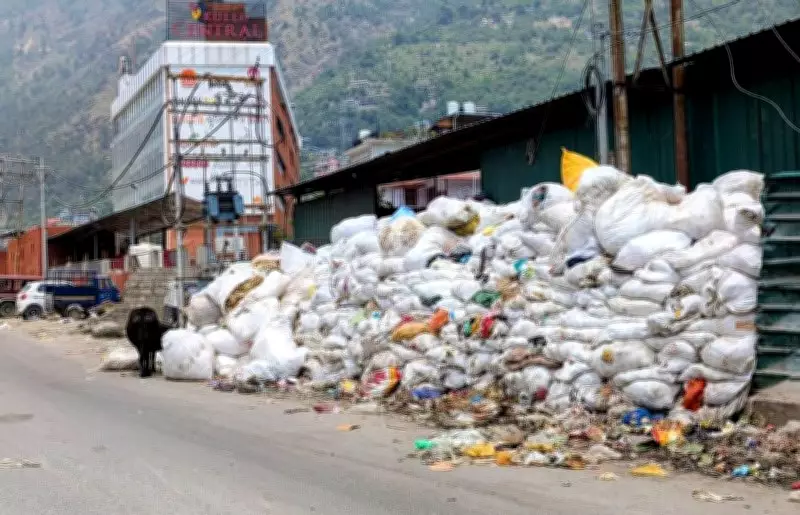
According to the report, the MRF is located barely 15–20 metres from the Sarwari river and adjacent to Nehru Park, yet it is operating without the mandatory authorisation from the HPSPCB. Instead of serving as a scientific waste segregation and processing centre, the facility is effectively functioning as a dumping ground for mixed municipal solid waste.
Lack of Basic Infrastructure and Scientific Processing
During the inspection, the committee found no functional segregation machinery and no effective mechanism for scientific processing of wet waste. Leachate generated from the accumulated garbage was found without a proper collection system, raising concerns that it could flow into the Sarwari river during heavy rainfall and contaminate the water body. The inspection also revealed foul odour, unhygienic surroundings, and a large presence of flies, indicating poor management of the site.

The committee noted that the facility lacks basic infrastructure required for scientific waste management, including a weighbridge, log books, and proper record-keeping systems. Around 150 tonnes of segregated waste and another 25–30 tonnes of wet waste were found accumulated at the site, even as Kullu town generates nearly seven to eight tonnes of municipal solid waste every day.
Warning of Legacy Waste Dump and Environmental Hazards
Warning that continued accumulation of waste could transform the site into a legacy waste dump, the committee observed that delayed scientific disposal would make future remediation far more difficult and expensive while creating long-term environmental and health hazards. It also pointed out that nearly 25 per cent of Nehru Park has already been used for constructing an approach road and an additional shed for the MRF, where foundation work had been completed during the inspection.
The findings assume significance as the HPSPCB has already imposed an environmental compensation of Rs 29 lakh on the Kullu Municipal Council (MC) for violations related to waste management.
No Immediate Closure Recommended; Upgrades Suggested
Despite highlighting serious deficiencies, the committee did not recommend immediate closure of the facility, noting that the Municipal Council presently has no alternative site for handling solid waste. Instead, it suggested that the existing MRF be upgraded as an interim measure until a permanent solid waste management facility is established.
Among its recommendations are immediate removal and scientific processing of accumulated waste, installation of segregation machinery, development of an effective leachate collection system, obtaining statutory authorisation from the Pollution Control Board, and adoption of odour-control measures.
High Court Orders and Monsoon Risks
The committee also noted that issues concerning Nehru Park are already pending before the Himachal Pradesh High Court, where status quo orders remain in force, and stressed that these directions must be complied with. It further warned that the facility’s location close to the Sarwari river floodplain significantly heightens environmental risks during the monsoon.
The NGT is scheduled to hear the matter on September 16. The report has renewed demands from local residents for a permanent, scientifically designed waste management facility instead of continued dependence on what the committee itself has described as a temporary and inadequate arrangement.