

Odisha's Persistent Child Labour Problem: A Decade Without Official Survey
In Bhubaneswar, a concerning reality persists: the illegal employment of children across various labour-intensive sectors continues unabated in Odisha. Shockingly, child rights activists have revealed that the state's labour department has not conducted a dedicated survey to identify these vulnerable children for the past ten years. This lack of systematic data collection hampers effective intervention and policy-making.
Historical Context and Current Legal Framework
The last comprehensive survey was carried out by the government in 1996, following a directive from the Supreme Court of India. That survey identified a staggering 2.15 lakh child labourers across the state. Currently, Odisha implements the Child and Adolescent Labour (Prohibition & Regulation) Act, 1986, which explicitly bans the employment of children below 14 years in any occupation. Despite this legal prohibition, enforcement remains inconsistent, with only sporadic inspection and rescue drives conducted throughout the year.
Child rights activist Benudhar Senapati highlighted a critical flaw in the system: "Not all child labour cases reach the police, which is why rescue operations often end up only in fines and don't act as a sufficient deterrent." This points to a systemic issue where legal consequences for employers are frequently inadequate.

Digital Reporting and Enforcement Gaps
The Ministry of Labour and Employment operates the 'PENCIL' (Platform for Effective Enforcement for No Child Labour) portal, designed for online reporting of child labour cases. However, data from this platform reveals significant underreporting. From 2017 to the present, only 135 complaints of child labour were filed from Odisha. Of these, 97 complaints were closed, but no action was taken in 37 instances. Alarmingly, a police complaint was filed in just one case, indicating a severe lack of follow-through on reported violations.
Rescue and Rehabilitation Efforts Under NCLP
Contrasting with the low complaint numbers, substantial rescue operations have been undertaken. During the same period, over 3,000 children were rescued and mainstreamed under the National Child Labour Project (NCLP) scheme administered by the ministry. The NCLP has been implemented in six districts: Deogarh, Jharsuguda, Kendrapada, Keonjhar, Koraput, and Sundargarh.
To date, 3,384 child labourers have been rescued through this initiative. Among them, 2,589 were enrolled in NCLP schools, which provide bridge education and vocational training specifically for children rescued from hazardous occupations. Furthermore, 2,568 of these rescued children have been successfully reintegrated into mainstream society, showcasing the potential impact of focused rehabilitation programs.
Government Response and Legislative Updates
In a recent assembly session, Labour Minister Ganesh Ram Singkhuntia responded to a query from MLA Satyajeet Gomango regarding steps to rescue and rehabilitate child labourers in Rayagada district. The minister reported that 124 inspections were conducted in the district since 2024, leading to the rescue of 13 children. However, only three cases resulted in prosecutions, underscoring the gap between rescue and legal accountability.
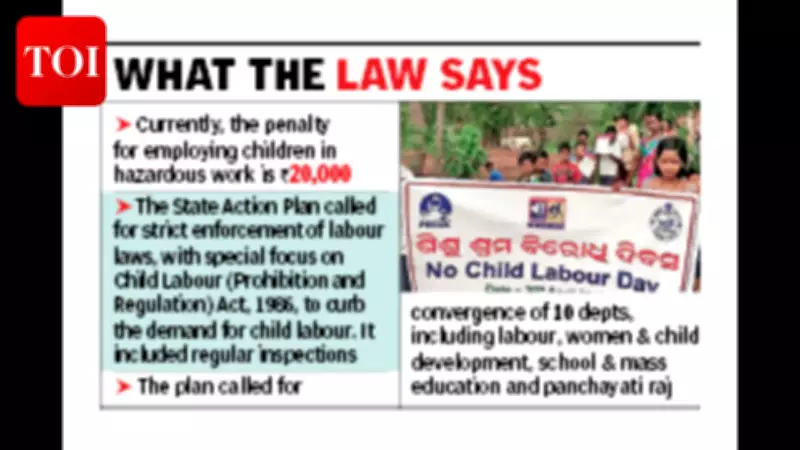
Earlier, the minister had informed the assembly that between 2022 and 2025, 101 child labourers were rescued statewide, with 116 cases registered against their employers. He emphasized that the government is implementing a 'State Action Plan' for the elimination of child labour. This plan involves multiple departments working collaboratively to conduct inspections, execute rescue operations, and run awareness campaigns aimed at eradicating this social ill.
The disparity between the number of rescues and the paucity of prosecutions highlights ongoing challenges in enforcement. Without a current survey to accurately map the extent of child labour, efforts may remain fragmented and insufficient to address the root causes. Activists continue to call for more robust data collection and stricter legal actions to protect children's rights and ensure their access to education and a safe childhood.






