PM Modi Intervenes in NCERT Controversy, Demands Accountability
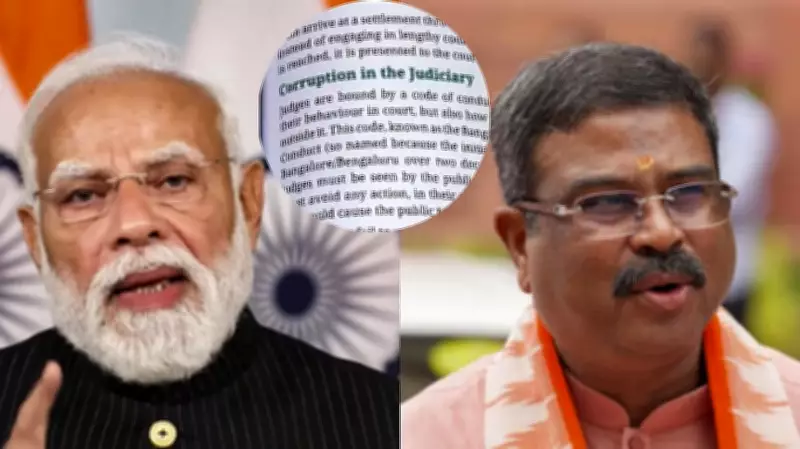
Prime Minister Narendra Modi has taken a firm stance on the ongoing NCERT controversy, directing the Union Education Ministry to swiftly identify and fix responsibility against those involved in drafting a contentious portion of educational materials. This decisive move comes amid growing public and political scrutiny over the issue, which has sparked widespread debate across the nation.
Education Minister Expresses Anguish and Pledges Action
Union Education Minister Dharmendra Pradhan has publicly expressed his profound anguish and disappointment regarding the controversial content. In a strong statement, Minister Pradhan assured that the ministry will leave no stone unturned in fixing accountability and taking stringent action against all individuals responsible for the drafting oversight. He emphasized the government's unwavering commitment to maintaining the highest standards of educational integrity and accuracy in NCERT publications.
The controversy centers on a specific portion within NCERT materials that has been deemed inappropriate or misleading by critics. While exact details of the contentious content have not been fully disclosed in official statements, sources indicate it relates to historical or social studies components that have raised eyebrows among educators and policymakers alike.

Ministry Launches Comprehensive Review Process
Following Prime Minister Modi's directive, the Education Ministry has initiated a thorough internal review to trace the origins of the controversial draft. This process involves:
- Examining the drafting timeline and approval mechanisms
- Identifying all personnel involved in content creation and vetting
- Assessing compliance with established educational guidelines and protocols
- Evaluating potential systemic failures that allowed the issue to arise
The ministry is expected to submit a detailed report to the Prime Minister's Office within a stipulated timeframe, outlining findings and recommended disciplinary measures. This proactive approach underscores the government's zero-tolerance policy toward lapses in educational content that could potentially mislead students or distort factual narratives.
Broader Implications for Educational Governance
This incident has reignited discussions about quality control mechanisms within India's premier educational body. NCERT (National Council of Educational Research and Training) plays a pivotal role in shaping curricula for millions of students nationwide, making accuracy and objectivity paramount. The Prime Minister's intervention signals a heightened focus on:
- Strengthening editorial oversight and multi-layer review processes
- Enhancing transparency in content development and approval workflows
- Ensuring alignment with national educational objectives and values
- Building greater public trust in institutional educational outputs
Minister Pradhan has reiterated that the government views this matter with utmost seriousness, recognizing that educational materials form the foundation of young minds' development. He has promised that corrective measures will be implemented not only to address this specific incident but also to prevent similar occurrences in the future through improved governance frameworks.
The development comes at a time when educational reforms and content accuracy are under increased public scrutiny, making this administrative response particularly significant for stakeholders across the academic spectrum. Further updates are anticipated as the ministry's investigation progresses and accountability measures are finalized.