Pune: District collector and district election officer Jitendra Dudi on Wednesday said voters who have been mapped with records available from previous electoral rolls will not receive notices during the Special Intensive Revision (SIR). Election authorities stepped up preparations for the month-long door-to-door verification exercise that begins on June 30.
Door-to-Door Verification Plan
Both booth-level officers (BLOs) and booth-level agents (BLAs) will be crucial to reach all 90.84 lakh voters in the district and ensure that all eligible voters are included and ineligible voters are excluded. Pune district has so far mapped 54.1% of its electorate, or around 49 lakh voters, under the Election Commission’s verification process.
“BLOs have taken considerable efforts to improve mapping in Pune district which has the highest number of voters in the state. We have gone from around 8% mapping to 54%,” Dudi said.

Classification of Electors
Under the SIR categorisation plan, electors will be classified as “mapped” and “unmapped”. Mapped electors include those whose names are available in the electoral rolls of 2002, 2005 or 2025-26. Electors not directly found in these rolls may still qualify as mapped if they can be linked through parents or grandparents whose names appear in earlier electoral records. Officials clarified that voters whose details fully match earlier electoral records will not receive notices and their records can be accepted without additional verification. Notices will be issued only where details partially match earlier records or where authorities identify a “logical discrepancy” requiring clarification or supporting documents.
Deputy election officer Minal Kalaskar said electors have broadly been classified into four categories. The first comprises voters whose names appear in both the 2002 and current electoral rolls and can be directly mapped. The second includes electors aged 18-39 years whose names are present only in current rolls but whose parents or grandparents featured in the 2002 rolls, allowing family linkage to be established. The third and fourth categories cover electors whose names, or whose relatives’ names, do not appear in the 2002 rolls and whose cases will be examined separately as per Election Commission guidelines.
Timeline and Training
The election department will begin training officials from June 20, while partially pre-filled forms will be distributed from June 29. Pune district has 8,417 BLOs, with each officer expected to cover roughly 1,200 voters. The house-to-house phase will be conducted from June 30 to July 29.
Draft electoral rolls will be published on Aug 5, followed by a claims and objections period till Sept 4. Hearings, verification and notice-related proceedings will continue till Oct 3, while the final electoral rolls will be published on Oct 7.
Pre-filled Forms and Documentation
Officials said every elector would receive a partially pre-filled form carrying details such as the voter’s name, EPIC number and address. The form will also contain a QR code and the elector’s earlier photograph. Voters will be required to affix a recent colour photograph and furnish details including date of birth, mobile number and family particulars. Aadhaar details will remain optional and will be used only for identification purposes.
Nodal officers have been appointed in Pune Municipal Corporation, Pimpri Chinchwad Municipal Corporation, Pune Zilla Parishad, Passport Office, Maharashtra State Board of Secondary Education and Maharashtra State Board of Higher Secondary Education for the verification.
Political Party Involvement
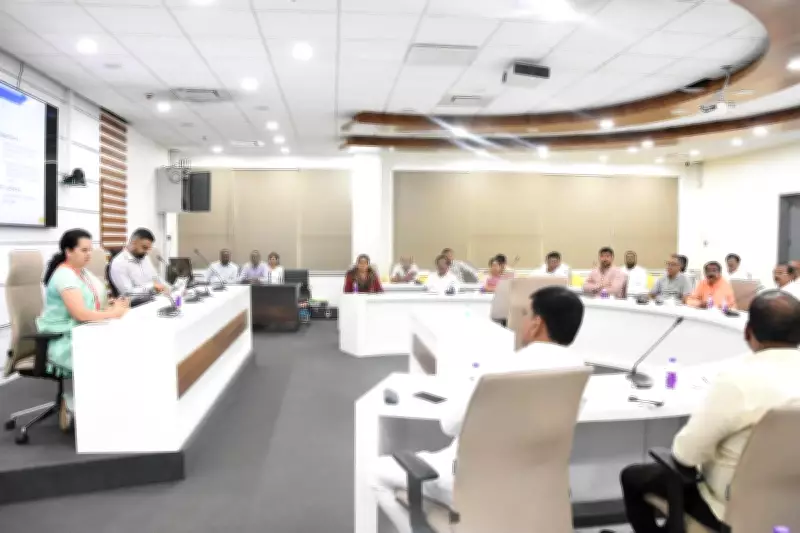
Dudi said political parties were urged to appoint BLAs for every polling booth and that review meetings would be held every Wednesday. “We have been repeatedly pursuing all parties to appoint BLAs for each booth so that they can assist the BLOs,” he said.
According to Kalaskar, only 9,191 BLAs have been appointed across the district so far. The BJP has appointed 4,285 BLAs, followed by the NCP (2,356), Shiv Sena (1,246), NCP (SP) (872) and Congress (204).

Huge Electorate a Challenge
Election officials said the last Special Intensive Revision was conducted between 2002 and 2004. Major demographic changes over the last two decades warranted a fresh verification. Migration, duplicate registrations, non-removal of deceased voters and the possibility of wrongful inclusion of foreigners necessitate the exercise.
Pune’s electorate has nearly doubled since the previous revision. In 2002, the district’s 18 assembly constituencies had 45.96 lakh electors across 5,412 polling stations. As of June 16, 2026, Pune’s 21 assembly constituencies account for 90.84 lakh voters and 8,417 polling stations.
Chinchwad (6.87 lakh voters), Hadapsar (6.51 lakh), Bhosari (6.35 lakh), Khadakwasla (5.97 lakh) and Wadgaon Sheri (5.18 lakh) are among the largest. Kasba Peth (2.84 lakh) and Shivajinagar (2.93 lakh) have the lowest elector strength.
Transgender Outreach
Pune district currently has 865 registered third-gender electors, with the highest numbers in Wadgaon Sheri (108), Bhosari (103), Parvati (99), Hadapsar (85), Chinchwad (64) and Shivajinagar (51). Since transgender electors were not separately categorised during the previous intensive revision and many may no longer reside at their registered addresses, the district administration will conduct a dedicated enrolment and verification drive through social justice department to locate them and distribute enumeration forms.