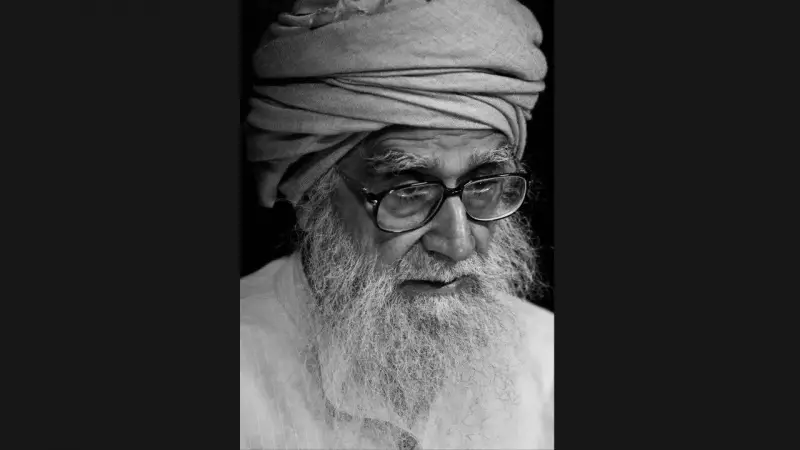
In June 2011, during a visit to the United States, Indian Islamic scholar Maulana Wahiduddin Khan found himself in an American church in Philadelphia. He had been invited to deliver a lecture on the paramount importance of peace. After his address, a Christian scholar posed a profound question, referencing a well-known Biblical teaching: ‘Love your enemy’ (Matthew 5:44). The scholar then asked if the Quran contained any similar verse.
The Quranic Answer: Transforming Enmity into Friendship
Maulana Wahiduddin Khan responded affirmatively, directing the audience to Chapter 41, Verse 34 of the Quran. He provided its translation: “Good and evil deeds are not equal. Do good deeds in return for bad deeds; then you will see that one who was once your enemy has become your dearest friend.” This verse, he explained, is not merely a moral instruction but is deeply rooted in the law of nature.
He elaborated that according to this natural law, there are no permanent friends or permanent enemies. Humanity is divided into two groups: actual friends and potential friends. The key to peace lies in recognizing this potential and through thoughtful planning and peaceful dialogue—dawah work—converting potential friendship into reality. He critiqued those who engage in violence in the name of jihad for taking appearances at face value, declaring someone an enemy instantly without looking deeper to see the inherent potential for friendship.

Scientific Basis for a Global Human Family
Maulana Wahiduddin Khan further grounded his argument in science and common ancestry. He stated that all men and women are children of Adam and Eve, making all human beings part of a single, global family—blood sisters and brothers. He cited anthropological research, specifically referencing a January 11, 1988, Newsweek article titled “The Search for Adam and Eve”, to affirm that this is no longer just a religious narrative but a scientifically established biological fact.
This acceptance of common ancestry, he argued, removes the theoretical justification for tribal, national, or any other form of war. “The old kinds of hostilities should come to an end,” he asserted. The equation must shift from ‘we and they’ to ‘we and we’. In this light, initiating war is akin to waging war against one’s own family members, an act belonging to a pre-civilized age.
War as a Crime Against Humanity: The Quranic Imperative for Peace
To underscore the gravity of violence, the scholar referenced another pivotal Quranic verse, 5:32: ‘…whoever killed a human being—except as a punishment for murder or for spreading corruption in the land—shall be regarded as having killed all mankind, and that whoever saved a human life shall be regarded as having saved all mankind.’
He described war as an act of mass murder, the worst kind of heinous crime where killing a human is not like killing an animal but is tantamount to killing one’s own self. This violence, he contended, stems from ignorance. The most effective way to counter it is through promoting universal education and awareness. In the modern age, where scientific thinking has replaced outdated theories like geocentrism, a realistic assessment demands abandoning violence. “The sole option we have before us is not war, but peace,” he concluded, framing peaceful coexistence as a scientifically-verified way of life, not just an ethical principle.