Rajasthan Budget's Sanskrit Teacher Training Seat Expansion Faces Regulatory Hurdle
Finance Minister Diya Kumari's announcement in the Rajasthan state Budget regarding the addition of 500 seats in Sanskrit Teacher Training and Shiksha Shastri courses has created significant confusion within government circles. Officials have quickly realized that the state cannot unilaterally increase seats in these specialized programs without obtaining mandatory approval from the National Council for Teacher Education (NCTE), the central regulatory body for teacher education in India.
Government Scrambles to Address Budget Inclusion
Official sources revealed that the Sanskrit education department moved swiftly after the issue came to light, convening a meeting of senior officials on Friday to thoroughly examine how the seat increase proposal found its way into the state Budget documents. The department is now investigating the procedural oversight that led to this announcement being made without proper regulatory clearance.
Seeking to downplay the controversy, Sanskrit Education Minister Madan Dilawar emphasized that the Budget announcement should be viewed as nothing more than a preliminary proposal. "This is only a Budget proposal; we will review every bit of it and make changes to it, if needed," he told media representatives, attempting to reframe the announcement as a starting point for discussion rather than a finalized decision.

Declining Enrollments Raise Questions About Need
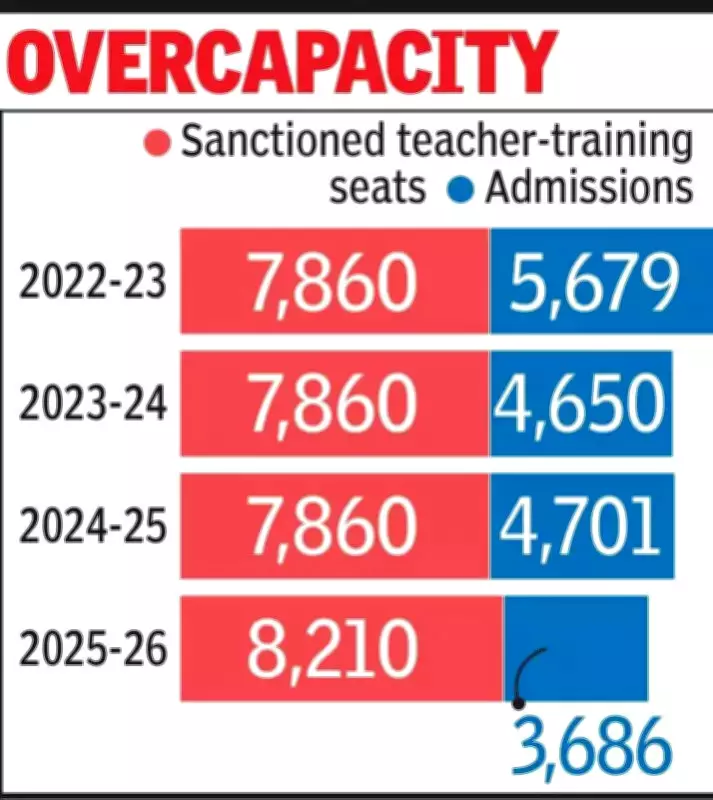
Beyond the technical regulatory hurdle, the proposed seat expansion appears particularly puzzling given the sustained decline in admissions to Sanskrit teacher training courses across Rajasthan. Despite incremental increases in sanctioned seats over recent years, official data reveals a concerning downward trend in actual enrollments.
The enrollment figures for the 2025-26 academic session stand at just 3,686 students against 8,210 sanctioned seats. This represents a further decline from the previous year's numbers, which saw 4,701 admissions against 7,860 available seats. The consistent gap between available capacity and actual enrollment has raised serious questions about the practical need for additional seats.
University Officials Express Reservations
Officials at Rajasthan Sanskrit University have voiced significant reservations about the proposed seat expansion, citing the clear downward trajectory in student interest and enrollment. University representatives have questioned the educational and financial logic behind adding more seats when existing capacity remains substantially underutilized.
The situation highlights the complex interplay between political announcements, educational planning, and regulatory requirements in India's federal system. While state governments may propose educational initiatives, central regulatory bodies like NCTE maintain oversight to ensure quality standards and prevent unnecessary expansion that could dilute educational quality or waste public resources.
This development serves as a reminder that Budget announcements, while politically significant, must undergo thorough technical review and regulatory compliance checks before implementation. The episode underscores the importance of intergovernmental coordination in education policy matters, particularly when they involve professional training programs with national standards and accreditation requirements.