Urban Roads Turn Hazardous: Reckless Driving Epidemic Grips Indian Cities
Across India's major metropolitan centers, urban streets have transformed into arenas of constant peril. Drivers engage in dangerous swerving maneuvers, motorcyclists accelerate beyond safe limits, and pedestrians frequently disregard fundamental traffic regulations. The tangible outcomes of this behavioral breakdown are increasingly evident: a rising tally of accidents, numerous near-miss incidents, and escalating frustration among all road users.
While comprehensive traffic rules exist within legal frameworks, enforcement mechanisms consistently struggle to match the rapid pace and dense congestion characteristic of Indian roadways. Civic sense—that essential unwritten code encompassing mutual respect, patience, and personal restraint—appears to be eroding significantly. From sprawling urban hubs like Delhi and Bengaluru to emerging smaller towns, hazardous road conduct has shifted from isolated occurrences to disturbingly routine phenomena.
Recent Incidents Highlight Widespread Recklessness
Zig-Zag Mayhem on National Highway-48

On January 18, social media platforms circulated a viral video depicting an SUV aggressively weaving through congested traffic on National Highway-48 near Narela in North Delhi. The driver, identified as 21-year-old Daud Ansari, executed dangerous zig-zag patterns between vehicles with minimal consideration for others' safety. Law enforcement responded promptly: authorities intercepted the vehicle, impounded it, and arrested Ansari under provisions of the Bharatiya Nyaya Sanhita and the Motor Vehicles Act. His driving license was officially confiscated.
Stunt Performances and Systematic Violations
The Delhi-National Capital Region has observed several alarming trends throughout the past year. Groups of young men have been documented performing high-speed stunts, maneuvering recklessly through traffic, and even standing through vehicle sunroofs during motion. Wrong-side driving—colloquially known as driving against established traffic flow—persists as a chronic issue. For instance, Rohini Sector 23 alone registered over 2,000 such violations within a brief monitoring period.
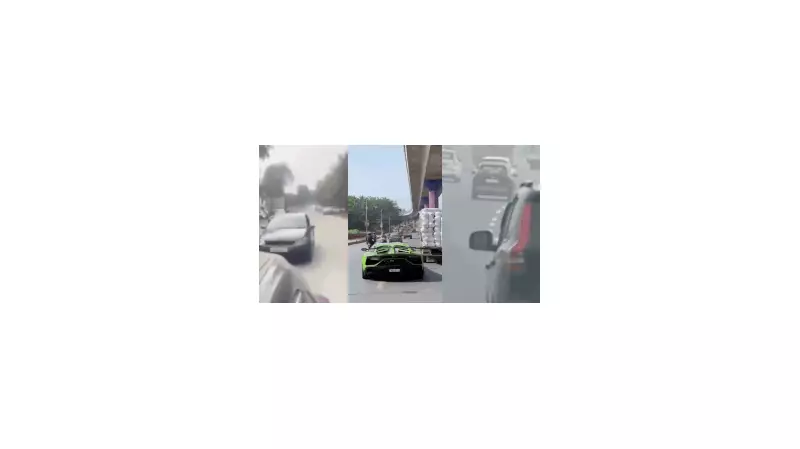
Nocturnal speeding by motorcyclists, with nearly half exceeding legal velocity limits, further intensifies roadway dangers. Bengaluru presents a parallel narrative where streets have evolved into platforms for hazardous driving and acoustic pollution. Recently, officials registered a case against the owner of a Lamborghini in Kengeri after dashcam footage revealed the luxury car speeding recklessly through city thoroughfares. The vehicle's defective, excessively loud silencer attracted additional regulatory scrutiny.
Tragic Consequences Across Multiple Cities
Recent accidents nationwide demonstrate how momentary errors or aggressive driving can rapidly escalate into fatal outcomes. In Kundapur, Karnataka, a motorcyclist attempting high-speed overtaking collided with a private bus, sustaining fatal head injuries. Police filed a case categorizing the incident under rash driving and negligence statutes.
Ahmedabad witnessed an AMTS bus on SG Highway experiencing reported brake failure, resulting in collisions with a school van, an autorickshaw, and multiple other vehicles. While drivers sustained injuries, viral CCTV footage prompted First Information Reports and financial penalties for rash driving. The bus operator faced termination by administrative authorities.
Even ceremonial corridors remain vulnerable. Shortly before Republic Day rehearsals in Kolkata, a speeding automobile crashed into guardrails on Red Road. The driver disregarded police directives and attempted to flee the scene. Although no injuries occurred, the episode revived memories of a similarly deadly collision at the identical location in 2016.

Mindset and Vehicle Stereotyping Controversy
Authorities emphasize that reckless driving extends beyond mechanical operation to encompass the psychological disposition behind steering controls. In 2025, Haryana Director General of Police OP Singh generated controversy during a Gurgaon press interaction by associating specific vehicles—particularly Mahindra Thar SUVs and Royal Enfield Bullet motorcycles—with stunt-oriented behavior, suggesting they were frequently operated by "goons". Singh remarked, "Whoever has a Thar, their mind must be twisted. Thar is not a vehicle, it's a statement that we are like this. All the goons ride it. Meaning, the kind of vehicle shows the mindset."
These observations triggered significant backlash. A Gurgaon-based Thar proprietor issued a legal notice alleging defamatory and humiliating content, contending that vehicle ownership should not determine individual character or driving conduct.
Fatal Overspeeding Incident in Jaipur
The perils of excessive velocity gained tragic emphasis in Jaipur recently when an 18-year-old girl died after being struck by a speeding Thar while standing roadside. The accident occurred on Express Highway near Shanti Bagh under Kardhani police jurisdiction. The victim, Anaya Sharma—a Jhunjhunu district resident living in Jhotwara—was preparing for armed forces physical recruitment tests, according to police reports. She had embarked on a morning jog with a companion but paused roadside when her friend lagged behind. Moments later, an overspeeding Mahindra Thar approaching from 200-Feet Ajmer Road direction collided with her, causing immediate fatality.
Citizen Perspectives and Systemic Challenges
Ordinary commuters directly experience these dangers daily. Rohan Sareen, a technology company employee, described commuting hazards, especially during nighttime hours. Two days prior to his interview, he witnessed an SUV collide with a hatchback and escape by driving wrong-direction. One month earlier, he observed a group in a speeding vehicle halt beside another car—apparently their own—and assault an innocent motorist near Best Tech Business Tower on Sona Road.
"High-speed driving on city roads makes even routine travel dangerous," Sareen noted. "You never know who is about to take a risk that could endanger everyone around them."
Such firsthand accounts underscore that civic responsibility transcends rule compliance to include genuine respect for fellow travelers' safety. They further reveal a nationwide pattern wherein ordinary citizens endure the consequences of reckless behavior while enforcement efforts frequently trail incident occurrence rates.
Infrastructure Deficiencies Compound Risks
Roadway dangers extend beyond individual decisions to encompass systemic infrastructural failures. Deficient maintenance, persistent potholes, malfunctioning signage, and inadequate illumination collectively worsen existing problems. Bengaluru exemplifies this crisis where road degradation outpaces repair capabilities. Inadequate upkeep combined with aggressive driving creates perfect conditions for accident proliferation.
These issues are fundamentally interconnected: diminished civic awareness, enforcement deficiencies, and infrastructure shortcomings collectively amplify risks for pedestrians, cyclists, motorists, and public transport users alike. Authorities confront dual challenges: modifying behavioral patterns while upgrading physical infrastructure, all amidst expanding urban populations and exponential vehicle growth.
Pathways Toward Sustainable Solutions
From modest towns to massive megacities, India's thoroughfares reveal consistent themes—everyday carelessness intensified by disregard for communal norms. Specialists emphasize that lasting solutions require strategies extending beyond monetary penalties or vehicle confiscations. Comprehensive road safety initiatives, civic education programs, stringent licensing protocols, and proactive policing must synergistically reinforce enforcement measures. Public awareness campaigns highlighting shared responsibility—that roads constitute collective spaces rather than personal domains—are critically important.
Vigilant citizens like Rohan Sareen demonstrate that individual awareness and advocacy contribute meaningfully, yet structural transformation remains imperative. Each prevented accident, every curtailed stunt performance, and all corrected reckless decisions incrementally enhance safety for millions depending on urban streets daily.
Without reinforced civic consciousness, robust enforcement, and infrastructure modernization, the dangerous gamble with speed and recklessness will persist, continually endangering commuters, pedestrians, and the broader public.