

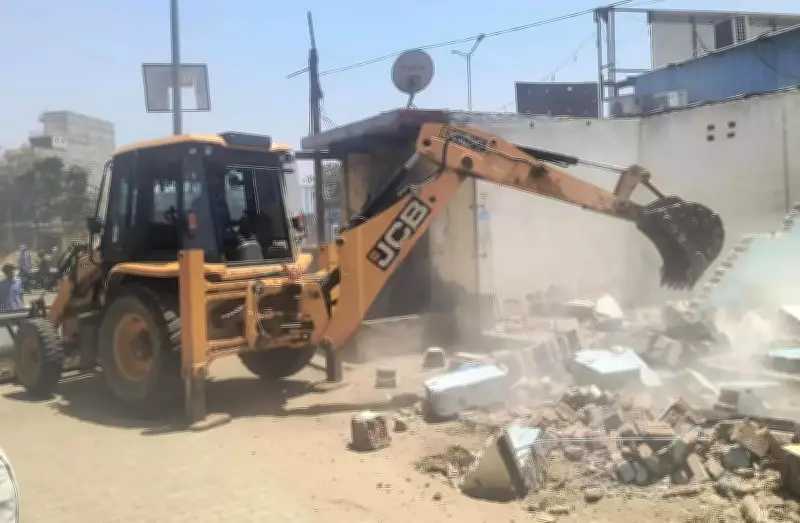
The Supreme Court has directed that notice be issued to the Gurugram Metropolitan Development Authority (GMDA) as part of an ongoing nationwide case concerning unauthorised constructions, land-use violations, and enforcement of building regulations. A bench of justices Ahsanuddin Amanullah and R Mahadevan included GMDA among several National Capital Region (NCR) authorities, including the New Okhla Industrial Development Authority (NOIDA), Greater Noida Industrial Development Authority (GNIDA), Ghaziabad Municipal Corporation, and Faridabad Municipal Corporation. These bodies have been asked to apprise themselves of the exercise being undertaken in the matter.
A senior GMDA official told TOI that the agency does not grant permission for private construction activities. The official added, "It also does not take action against such unauthorised constructions, land use violations of building regularisations." This statement underscores the limited role of GMDA in private construction enforcement.
Background of the Case
The case stems from concerns raised before the court over the implementation of building regulations and land-use norms across different parts of the country. The Supreme Court has been examining whether local and development authorities are effectively enforcing rules against unauthorised constructions and illegal changes in land use. The court's latest directions follow a submission by court-appointed amicus curiae Ajit Kumar Sinha, who told the bench that affidavits filed by several authorities so far had only documented surveys conducted to verify land-use and property compliance — without specifying what follow-up action was taken.

The bench found this insufficient. Merely conducting surveys and reporting their results, the court indicated, does not amount to effective enforcement. The bench accordingly directed all respondents to file fresh affidavits reflecting actual measures taken after surveys, including sealing, demolition, or other action permissible under law. The court specified that these affidavits be personally affirmed by the heads of the authorities concerned.
Additional Directions
In a separate direction, the court asked statutory appellate bodies and quasi-judicial forums dealing with building norm violations and unauthorised construction cases to endeavour to clear pending matters within three months. The order acknowledges that a backlog of such cases before these forums has contributed to delayed enforcement on the ground. The ministry of housing and urban affairs was also added as a party respondent to the proceedings. The court noted that the issues before it involve authorities spread across multiple states and Union territories, making the ministry's participation necessary for a comprehensive resolution.
The matter will next be heard on August 4, when the court is expected to review the compliance reports filed by all authorities, including those newly brought into the proceedings. This development highlights the Supreme Court's proactive role in ensuring adherence to building regulations and land-use norms across the NCR and beyond.






