

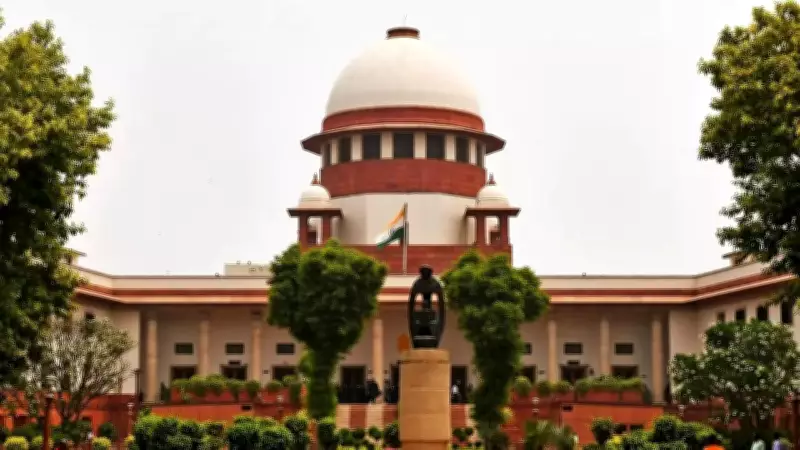
The Supreme Court of India has delivered a landmark judgment recognizing access to trauma care as an integral part of the Right to Life under Article 21 of the Constitution. The ruling, issued in the case SaveLIFE Foundation & Anr. vs Union of India & Ors on May 26, mandates a comprehensive and time-bound overhaul of the country's fragmented emergency care system. This decision has far-reaching implications for motorists, hospitals, and emergency responders across the nation.
Binding Directives for All States and Union Territories
The court's directions are binding on all 36 states and Union Territories, covering not only road crashes but the entire spectrum of trauma, including falls, burns, drowning, industrial accidents, fires, explosions, and disaster-related injuries. For millions of Indian motorists, particularly in dense urban regions such as Mumbai and across Maharashtra where traffic congestion and delayed emergency response remain persistent concerns, the judgment could prove transformative.
Addressing a Silent Public Health Crisis
India records nearly 4.67 lakh accidental deaths annually, according to National Crime Records Bureau data cited before the court. Road crashes alone account for around 1.77 lakh deaths each year. The figures become more troubling when viewed against long-standing evidence that many of these deaths are preventable. The Law Commission's 201st report had earlier concluded that nearly half of road-crash fatalities could be avoided with timely medical intervention, while the NITI Aayog-AIIMS Emergency and Injury Care Report of 2021 found that delays in emergency care contribute to at least 30% of trauma-related deaths.

Despite this burden, India had no unified and enforceable trauma-care architecture. Responses from 34 states and Union Territories placed before the court revealed a patchwork system marked by multiple emergency numbers, uneven ambulance standards, inadequate trauma registries, and inconsistent implementation of existing central schemes. It was this systemic gap that prompted SaveLIFE Foundation to move the apex court in October 2024, seeking recognition of trauma care as a constitutional entitlement and stronger implementation of existing emergency frameworks.
Key Directions Issued by the Court
The bench of Justices J.K. Maheshwari and Atul S. Chandurkar stopped short of creating an entirely new statutory regime but issued sweeping directions designed to convert policy frameworks into enforceable obligations.
Integration of Emergency Helplines
Perhaps the most visible change for citizens will be the integration of multiple emergency helplines into the single national number 112 within three months. Numbers such as 100, 101, 102, 108, 1033, and 1091 are to be technically and operationally integrated, accompanied by mass-media awareness campaigns.
Grievance Redressal for Good Samaritans
The court has also ordered states to establish physical and digital grievance redressal systems for Good Samaritans — citizens who help trauma victims at accident sites. Though protected under Section 134A of the Motor Vehicles Act and Good Samaritan Rules, many bystanders continue to fear police questioning or legal complications.
Ambulance Reforms
For road users, ambulance reforms may be equally significant. All registered ambulances — public and private — must comply with the National Ambulance Code, install GPS or vehicle tracking systems, and integrate with helpline 112. States have been directed to conduct structured audits covering response times, equipment, quality of care, and patient outcomes.
Training of Emergency Personnel
The order also addresses a long-recognised shortage of trained emergency personnel. States must adopt the standardised Emergency Medical Technician curriculum notified by the National Commission for Allied and Healthcare Professions within three months.
Creation of Trauma Registries
Another major reform is the creation of state trauma registries linked to a coordinated national registry. Health experts have long argued that India's inability to systematically record trauma cases has hampered policy planning and resource allocation.

Designation of Trauma Care Hospitals
The court further directed states to grade and designate public and private hospitals according to trauma-care capacity. Importantly, this classification is no longer restricted to National Highways but extends to state highways, district roads, and urban and peri-urban areas — a critical provision for cities such as Mumbai where serious trauma cases frequently occur away from highway corridors.
Operationalisation of PM RAHAT Scheme
Equally significant is the push to operationalise PM RAHAT — the Centre's cashless treatment scheme for road-accident victims. States have been given eight weeks to complete hospital designation and related digital systems. The court clarified that failure to implement the scheme would amount to violation of the Motor Vehicles Act.
Continuing Oversight by the Supreme Court
The Supreme Court has retained continuing oversight of the matter. Copies of the order are to be sent to chief secretaries of all states and Union Territories, who must submit action-taken reports within specified timelines. The matter is expected to return before the court after four months for further directions.
SaveLIFE Foundation founder Piyush Tewari described the verdict as a defining moment for public health and constitutional rights, saying it ensures that no citizen should be denied timely emergency care after suffering traumatic injury. For India — where trauma remains a silent public-health crisis and where survival often depends on chance, geography, and affordability — the judgment signals a shift from policy aspiration to constitutional promise.





