Supreme Court Declares Safe Footpaths a Fundamental Right, but Amritsar Lags
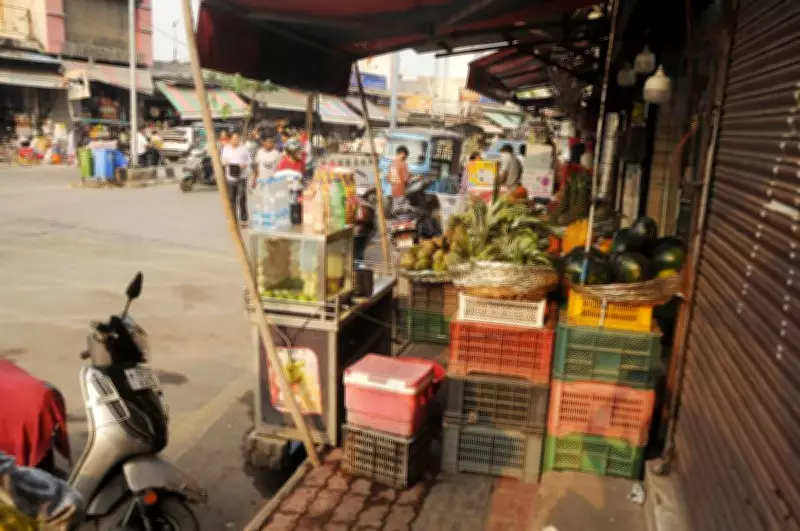
The Supreme Court of India has reaffirmed that every citizen has a fundamental right to safe pedestrian movement, rooted in Article 19 (Freedom of Movement) and Article 21 (Right to Life) of the Constitution. The Court issued a series of mandatory directions, including erecting physical barriers, towing illegally parked vehicles, imposing fines, constructing underground parking, and installing speed-limit signs. However, in Amritsar, implementation gaps remain stark. Footpaths across the city are routinely encroached upon by vendors, shopkeepers, and parked vehicles, forcing pedestrians onto busy roads and exposing them to danger. Enforcement drives are often sporadic and temporary, with confiscated goods reappearing within days, according to local residents and officials.
Encroachments Persist Despite Court Orders
In many areas of Amritsar, footpaths have virtually disappeared due to encroachments. For instance, on Majitha Road near Guru Nanak Hospital and Ghala Mala Chowk, footpaths are either blocked or unusable. Similar conditions exist in Ranjit Avenue and other posh localities, indicating a citywide problem. The Municipal Corporation periodically conducts anti-encroachment drives, but sustained enforcement remains absent. "Even when anti-encroachment drives are conducted, they are often reduced to temporary exercises, with the confiscated goods or structures reappearing within days," said a local civic activist. The problem extends to residential colonies, where influential individuals occupy footpaths with political or administrative patronage, reflecting a failure of governance.
Pedestrian Safety at Risk: Accident Data
Pedestrians remain among the most vulnerable road users in Amritsar. A joint three-year study by Guru Nanak Dev University's Guru Ramdas School of Planning, Punjab Government traffic advisors, and NGO Rahgeer found that pedestrians and two-wheeler riders are the principal victims of road crashes, with cars responsible for most fatal collisions. Amritsar recorded 25 road accident deaths in the first half of 2025 and 62 fatalities during 2024, with experts linking many of these tragedies to poor pedestrian infrastructure and encroached footpaths. The Supreme Court's ruling should become a catalyst for redesigning city roads with pedestrian safety as the first priority, said traffic experts.

Local Voices Call for Stringent Enforcement and Civic Responsibility
Residents and experts have voiced concerns over the lack of implementation. "The real issue is the implementation of the Supreme Court’s directions. These rulings will have no effect unless the authorities genuinely mean what they say and strictly enforce them," said Brig Harcharan Singh (retd). Many point to the absence of a civic sense as a root cause. "Fundamental rights are often encroached upon because we do not feel it is our duty to respect the rights of others. In Amritsar, this sense is largely missing," said Dr Arun Mehra. Educational institutions, especially schools, can play a pivotal role in shaping young minds and creating social awareness, along with strict enforcement of law, he added.
Practical Solutions Suggested: Pedestrian-Only Zones and Better Infrastructure
Given Amritsar's centuries-old layout with narrow roads and congested markets, providing dedicated footpaths throughout the city is challenging. However, practical solutions exist. "Instead, Amritsar needs practical solutions such as reclaiming encroached footpaths, improving traffic management, creating pedestrian-only zones in busy markets, enforcing strict parking regulations, and promoting public transport," said Dr Astha. Future road projects should include well-designed footpaths from the planning stage. Additionally, pedestrian crossings should be equipped with 'green man' signals, as seen in Western countries, where at the press of a button, vehicular traffic stops, allowing people to cross safely. These are neither expensive nor complicated measures, noted Dr Akashdeep Singh.

Enforcement Agencies Must Work in Tandem
The Municipal Corporation and Amritsar Development Authority (ADA), along with the traffic police, are constitutional duty-bearers for maintaining footpaths. "Any violation or failure in this regard should entitle citizens to seek accountability and compensation from the authorities. These agencies must work in coordination and act decisively to ensure free and safe walkways for citizens," said Anil Vinayak. The Supreme Court has also clarified that where obligations are breached, resulting in injury or loss of life, affected citizens or their families are entitled to seek appropriate legal remedies.
Call to Redesign Cities for People, Not Vehicles
The Supreme Court's judgment is a call to redesign cities with people, not vehicles, at the centre of urban planning. "This historic judgment is far more than a legal pronouncement—it is a call to redesign our cities with people, not vehicles, at the centre of urban planning," said Prof BD Sharma. A truly smart city is one where walking is safe, convenient, and dignified for every citizen. Protecting pedestrians is not merely an infrastructure concern; it is a constitutional obligation, added Bholla Singh Sidhu.