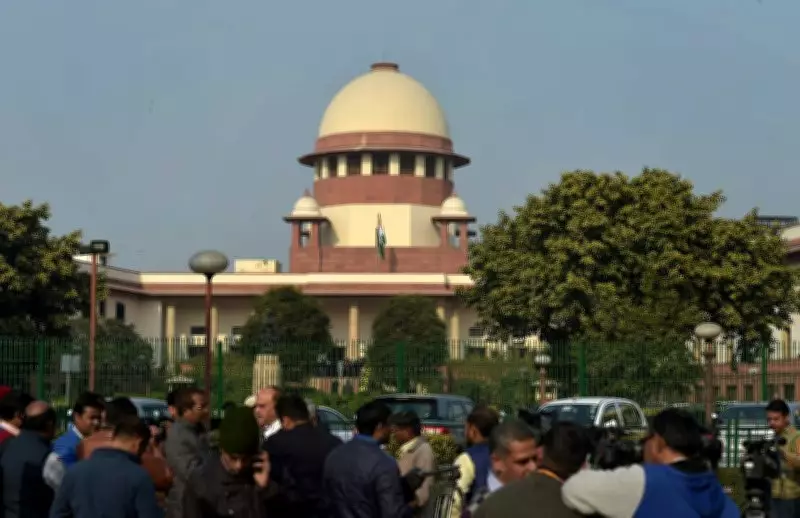
The Supreme Court of India has recently issued a notice to the central government, seeking its response on a public interest litigation (PIL) that highlights the issue of prolonged vacancies in the Armed Forces Tribunal (AFT). The PIL, filed by an advocate, underscores the critical need to fill these vacancies to ensure that ex-servicemen and their families receive timely justice.
Background of the Case
The Armed Forces Tribunal was established to adjudicate disputes and appeals related to service matters of armed forces personnel. However, due to a significant number of vacancies in judicial and administrative positions, the tribunal's functioning has been severely hampered. The petitioner argued that this delay in filling vacancies is causing immense hardship to veterans, who often have to wait for years for their cases to be heard.
Supreme Court's Directive
A bench comprising Chief Justice of India and another judge took note of the plea and directed the Centre to file its response within four weeks. The court emphasized the importance of the tribunal in providing swift justice to those who have served the nation. The bench remarked that the delay in filling vacancies is unacceptable and urged the government to take immediate steps.

Impact on Ex-Servicemen
The AFT handles a wide range of cases, including pension disputes, disability claims, and issues related to service conditions. With vacancies remaining unfilled, the backlog of cases has grown exponentially. Ex-servicemen and their families are left in a state of uncertainty, often struggling financially while awaiting decisions on their claims. The PIL highlights that this situation is a violation of their fundamental rights.
Government's Stand
The central government has yet to formally respond to the notice. However, in previous instances, the government has cited procedural delays and the need for thorough screening as reasons for the slow recruitment process. The Supreme Court has made it clear that such delays cannot be justified, especially when they affect the lives of those who have dedicated their careers to the nation's defense.
Next Steps
The matter is scheduled for further hearing after the Centre submits its response. The court has also suggested the possibility of appointing additional benches to clear the backlog. Legal experts believe that this intervention by the Supreme Court could lead to a faster resolution of the issue, bringing relief to thousands of ex-servicemen awaiting justice.
The case serves as a reminder of the judiciary's role in ensuring that administrative bodies function efficiently and uphold the rights of citizens, especially those who have served the country in uniform.