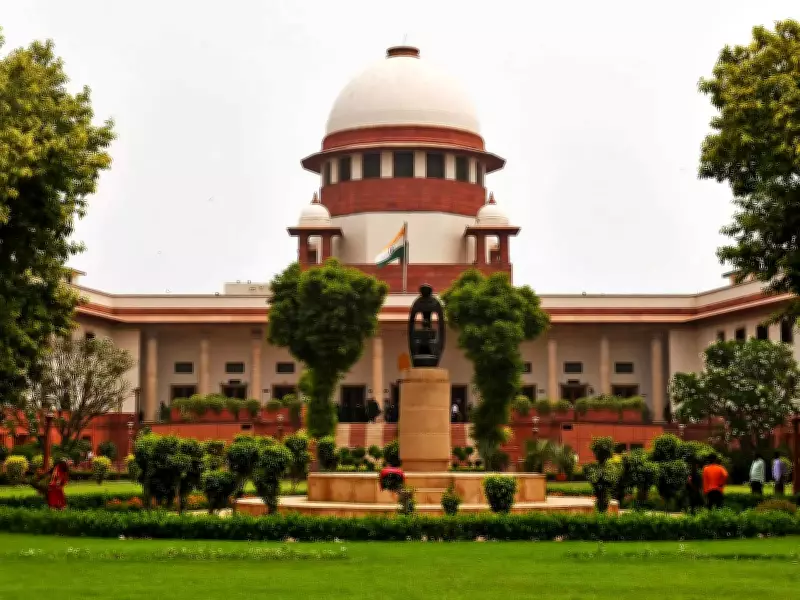
The Supreme Court has issued notices to the Ministry of Health and Family Welfare and 38 State Excise Departments in response to a Public Interest Litigation (PIL) seeking a ban on the sale of alcohol in inconspicuous packaging such as tetra packs and sachets. This development carries significant implications for public health and road safety.
Background of the PIL
The PIL was filed by Prince Singhal, a road safety expert and founder of the Community Against Drunken Driving (CADD). Singhal has been campaigning against drunken driving and underage drinking for over two decades.
Singhal expressed outrage over the easy availability of alcohol in deceptive packaging. He noted that more than ten states, including Uttar Pradesh, Odisha, West Bengal, Bihar, Andhra Pradesh, Maharashtra, Karnataka, Arunachal Pradesh, Assam, Delhi, and Uttarakhand, permit the sale of alcohol in tetra packs as small as 180 ml. Such packaging poses serious risks, including underage access, drinking in moving vehicles, smuggling, public consumption, health hazards, and environmental damage.

Court Proceedings
A three-judge bench led by Chief Justice Surya Kant took cognisance of the concerns raised in the petition and ordered the issuance of notices to the Centre and state authorities. The Court directed them to formulate a policy framework for banning the sale of alcohol in deceptive and inconspicuous packaging. During the hearing, the Chief Justice examined a photograph of a tetra pack of vodka annexed to the petition and remarked, "Green Apple Vodka. Very deceptive… Yes, notice to all."
Arguments Raised in the PIL
The PIL argues that alcohol sold in tetra packs and sachets resembles ordinary beverage cartons, making it easier for minors to carry and consume alcohol without detection. It further contends that such packaging facilitates consumption in public places and moving vehicles, while also enabling easier smuggling through security checkpoints compared to glass bottles or metal containers.
Singhal maintained that governments have a constitutional and moral responsibility to protect public health. He stated, "The State has a duty to raise nutrition levels, improve standards of living, and safeguard public health. In this case, however, revenue generation appears to be taking precedence over public welfare."
Commercial and Health Concerns
The petition highlights that tetra-pack alcohol is commercially advantageous due to lower production costs, reduced wastage, and greater portability. While it boosts sales and excise revenues, Singhal argues that it simultaneously encourages higher alcohol consumption, particularly among youth.
The PIL also points to the rapid growth of alcohol consumption in India, citing increasing urbanisation, rising disposable incomes, and changing social attitudes. India is now among the fastest-growing alcohol markets globally, with per-capita alcohol consumption more than doubling over the past decade.
Specific Issues Raised
- Potential for underage drinking
- Deceptive packaging that resembles juice cartons and soft drinks
- Difficulties in recycling multi-layered tetra packs
- Possible chemical contamination of liquor from plastic and carton packaging
- Absence of standardised health warnings on many such products
Link to Road Safety
Singhal linked the issue directly to road safety. He stated, "Drunk driving continues to be one of the biggest killers on Indian roads. Alcohol sold in tetra packs can be easily concealed and consumed inside moving vehicles, making enforcement more difficult. This creates additional risks, especially among young drivers who are more prone to risk-taking behaviour."
According to data cited in the petition, India records more than 6 lakh road accidents and over 1.5 lakh road fatalities annually. The PIL claims that alcohol-impaired driving remains one of the leading contributors to fatal crashes across the country, particularly among individuals aged between 18 and 45 years.

Prayer Before the Court
The petition seeks directions from the Supreme Court to frame a national policy prohibiting the sale of alcohol in inconspicuous packaging such as tetra packs and sachets. It also requests that states amend their excise laws and policies to standardise alcohol bottling practices, limiting packaging to clearly identifiable containers and eliminating discretionary approvals for deceptive packaging formats.