

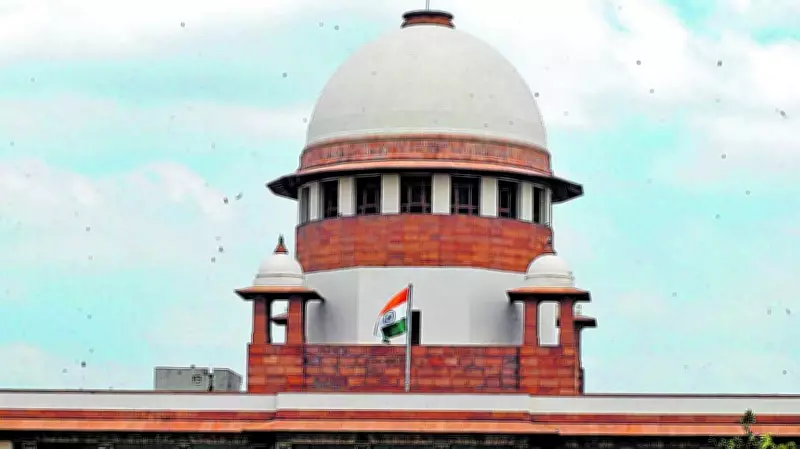
The Supreme Court has issued notices to the central government and the Punjab state government, seeking their responses to a petition that alleges non-implementation of the Right to Education (RTE) Act. The petitioner, who had previously filed a Right to Information (RTI) application on the matter, brought the issue to the court's attention.
Petition Highlights RTE Act Violations
The plea, filed by a concerned citizen, claims that the RTE Act is not being enforced properly in Punjab, depriving children of their fundamental right to education. The petitioner informed the court that despite multiple attempts through RTI, the authorities failed to provide adequate information on the implementation status.
RTI Application Preceded Legal Action
According to the petitioner, the RTI application was filed to seek details about the measures taken by the state and central governments to ensure compliance with the RTE Act. However, the responses received were unsatisfactory, prompting the petitioner to approach the Supreme Court.

The bench, comprising Justice A. N. Singh and Justice R. S. Reddy, took note of the submissions and directed the Centre and the Punjab government to file their replies within four weeks. The matter is scheduled for further hearing in July.
RTE Act: A Cornerstone of Education Policy
The Right to Education Act, enacted in 2009, guarantees free and compulsory education to all children aged 6 to 14 years. It sets standards for infrastructure, teacher qualifications, and curriculum. Non-compliance has been a persistent issue in several states, with activists citing lack of political will and inadequate funding.
The Supreme Court's intervention is seen as a significant step towards enforcing the act. Legal experts believe that the court's scrutiny could lead to stricter implementation measures and accountability for defaulting states.
The petitioner, represented by advocate Vikram Sharma, argued that the state's failure to implement the RTE Act violates Article 21A of the Constitution. The court has asked the respondents to clarify the steps taken to address the deficiencies highlighted in the petition.






