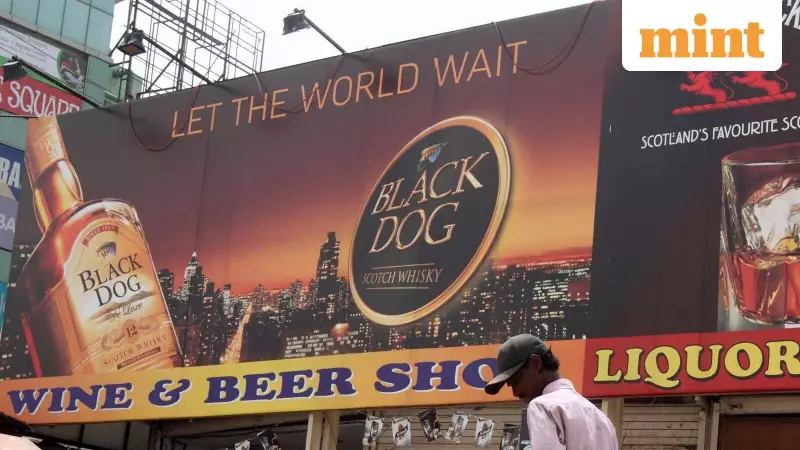
The Indian government's plan to introduce strict guidelines against surrogate advertising is likely to be delayed indefinitely. This is due to a significant legal hurdle: the current consumer protection law does not explicitly define or prohibit this indirect form of marketing for banned products like alcohol and tobacco.
Legal Ambiguity Halts Regulatory Push
According to two officials familiar with the discussions, the rollout of surrogate advertising guidelines faces a major roadblock. The Consumer Protection Act, 2019 does not treat indirect promotion as a standalone offence. This limits the government's ability to issue binding rules, creating a regulatory grey area.
The Central Consumer Protection Authority (CCPA), which derives its power from this Act, can only penalize advertisements that are misleading about the product or service being promoted. In surrogate ads, the promoted item—such as packaged water, soda, or merchandise—is often a legally sold product. This makes enforcement legally fragile, as proving deception is complex when the ad itself is not false.

Industry Calls for Self-Regulation Amid Growth
The delay prolongs uncertainty for an industry that is scaling rapidly. India's alcoholic beverage sector is projected to grow 8-10% in FY26, reaching a value of $61.97 billion. Companies often use brand extensions like music CDs, glassware, or event sponsorships to maintain brand visibility.
Vinod Giri, Director General of the Brewers Association of India (BAI), highlighted the challenge. "Drawing the line between what is surrogate and what is a genuine new venture is very difficult," he said. Giri, a member of the committee formed in March 2024 to regulate such ads, suggested a voluntary, self-regulatory framework as a more practical solution respected by companies.
Avneet Singh, founder of Medusa Beverages, echoed the need for clarity, noting that many Indian alcobev companies now operate in 15-20 states. "This shift makes regulatory clarity more urgent than ever," he stated.
Health Risks and Enforcement Challenges
Health experts express deep concern over the pervasive promotion of harmful products. Dr. Anand Vishal, an endocrinologist, warned of severe health issues like liver disease, cancer, and diabetes linked to alcohol and tobacco use. He stressed that surrogate and 'soft' advertising on digital media subtly links these brands with glamour, lowering harm awareness among youth.
Enforcement data reveals the focus has been elsewhere. In FY25, the CCPA imposed over ₹1 crore in penalties, largely on coaching institutes. While notices have been sent to 13 companies in the alcohol, tobacco, and pan masala sectors, no penalties have been levied for surrogate advertising so far.
Ashim Sanyal of Consumer Voice pointed to fragmented regulation as a key hurdle. Alcohol and tobacco ads are governed by sectoral laws and state excise rules, while the Advertising Standards Council of India (ASCI) oversees a voluntary code. The Consumer Protection Act does not give the Centre explicit power to unify these regimes through guidelines alone.
With the committee's draft report—which suggested halting surrogate ads unless independent market demand is proven—still in limbo, stakeholders await a legally sound solution that can withstand judicial scrutiny.