Why India Must Reimagine Civic Participation Through Jury Duty and National Service
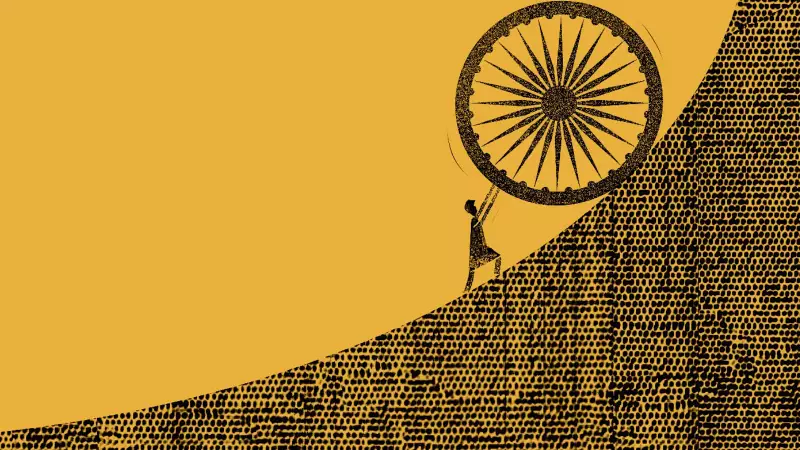
Indian nationalism today often feels like an empty slogan. People wave flags and share hashtags, but true participation remains limited. Many citizens vote once every five years, then retreat into passive observation. This approach leaves nationalism hollow and disconnected from daily life.
The Current State of Indian Nationalism
Nationalism in India has become a marketing tool. It sells products, political campaigns, and curated identities. At its core, nationalism should represent a moral relationship between citizens. It should involve individuals taking ownership of their actions and considering how those actions affect fellow nationals.
Instead, contemporary Indian nationalism often manifests as state ownership of citizens. Belonging gets dictated by conformity to dominant political preferences rather than shared civic responsibility. This transforms nationalism into something resembling obedience and surveillance rather than mutual obligation and solidarity.

The Justice System Crisis and Public Disengagement
Nowhere is civic disengagement more evident than in India's justice system. The judiciary struggles with massive backlogs. Cases drag on for years, sometimes decades. Public faith in judicial institutions continues to erode.
People complain about judges, politicians, and lawyers. Yet most criticism remains armchair commentary. Citizens feel disconnected from the justice system they criticize. They lack direct involvement in its functioning.
Reviving Jury Duty as Civic Responsibility
Bringing back jury duty could transform this dynamic. Jury service would compel citizens to participate directly in justice administration. It would force individuals to confront complex facts, ambiguous human conduct, and the weight of deciding another person's fate.
Justice would cease being an abstract service delivered by distant institutions. It would become a shared civic function. A jury drawn from across social strata would bring together people who otherwise never interact meaningfully.
India remains fractured by caste, religion, language, and economic disparity. Each group carries its own lived reality and conception of justice. Jury duty could act as an equalizer. It would compel citizens from radically different backgrounds to deliberate together, listen to one another, and arrive at collective judgments.
This process would expose participants to the many Indias coexisting within the country. It would temper certainty, challenge prejudice, and instill humility. Most importantly, it would transform justice from something people complain about into something they help sustain.
Addressing Historical Concerns About Juries
Any discussion of jury duty must acknowledge why India abandoned juries in the 1960s. The system was discontinued after the Nanavati case amid concerns about prejudice, public sentiment, and social pressure.
Those concerns emerged in a specific historical context shaped by colonial assumptions about Indian society. Bias and susceptibility to influence exist in all human institutions, including the judiciary itself. The question today is whether a democracy can afford to exclude citizens entirely from justice administration.
Introducing Civil Conscription for National Service
The argument for civic participation extends beyond the judiciary. Contemporary India displays pervasive entitlement across class lines. The wealthy often feel entitled to labor and deference from the less privileged. On roads, entitlement manifests as incessant honking and traffic violations.
Public spaces become obstacles to conquer rather than shared environments to respect. This entitlement mirrors cultural and political discourse. Many who claim to be "Indian first" imagine India as their specific version of it.
Civil conscription could offer a corrective. Mandatory national service would require citizens to serve others rather than merely extract state benefits. It would disrupt entitlement by reminding individuals that citizenship involves community.

Service would instill discipline while cultivating empathy. Conscripts drawn from one cultural background and posted to serve another would understand India's heterogeneity in ways textbooks cannot convey. Language barriers and unfamiliar customs would become lived experiences rather than abstractions.
Designing Thoughtful National Service Programs
Such service need not focus solely on military options. Healthcare, disaster relief, infrastructure maintenance, environmental conservation, and education all represent domains where national service could be meaningfully deployed.
The objective would be social integration rather than militarization. A society where citizens have served one another would be less likely to tolerate casual cruelty, cultural arrogance, or civic indifference.
Addressing Legitimate Concerns
Serious objections exist. India's history of coercive governance and bureaucratic overreach makes any expansion of compulsory civic duty deeply suspect. Any national service regime must avoid disproportionately burdening the poor while allowing the privileged to opt out.
Democratic citizenship has always entailed obligations including taxation, law compliance, and public participation. Jury duty and national service would simply make those obligations more visible, tangible, and shared.
The Path Forward for Indian Nationalism
Unless entitlement gets replaced by service, and indifference by participation, Indian nationalism will remain hollow. At best, it will continue as a marketing strategy. At worst, it might harden into a tool for exclusion and hatred.
If India wants to reclaim nationalism as a unifying civic ideal, citizens must do more than cheer from sidelines. They must sit in judgment, serve strangers, and learn sometimes uncomfortably what it means to belong truly to one another. Reviving jury duty and introducing civil conscription could provide practical pathways toward this transformation.