

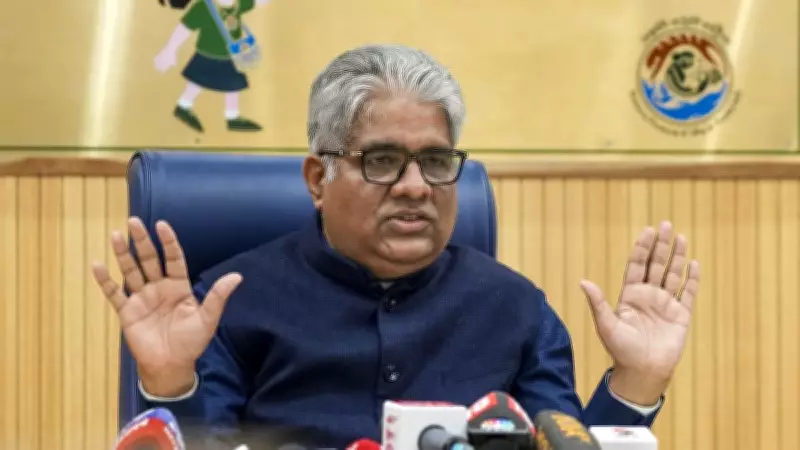
Union Minister Bhupender Yadav on Monday refuted Congress leader Jairam Ramesh's allegations regarding the environmental clearance for the Great Nicobar Island project. Yadav asserted that the project approval was based on a robust and comprehensive assessment, not merely on short-duration studies as claimed by Ramesh.
Minister's Response
In a detailed statement, the Minister for Environment, Forest and Climate Change clarified that while certain field components involved rapid assessments and seasonal surveys, the overall environmental appraisal was thorough. He emphasized that the clearance process adhered to all statutory requirements and scientific protocols.
Background of the Controversy
Jairam Ramesh, a senior Congress leader and former environment minister, had earlier questioned the validity of the environmental impact assessment (EIA) for the mega project. He alleged that the clearance was based on superficial studies conducted over a short period, which could undermine the ecological sensitivity of the region.

The Great Nicobar Island, part of the Andaman and Nicobar archipelago, is home to unique biodiversity and indigenous tribes. The proposed project includes a transshipment port, an international airport, and a power plant, aiming to boost economic development but raising concerns among environmentalists.
Government's Stance
Yadav countered the criticism by highlighting that the project underwent multi-tiered scrutiny by expert committees. He stated that the government is committed to sustainable development, balancing ecological conservation with strategic and economic needs.
The minister also noted that the project has been designed with mitigation measures to minimize environmental impact, including wildlife conservation plans and community engagement. He urged stakeholders to rely on factual data rather than unsubstantiated claims.
This exchange underscores the ongoing debate between development and environmental protection in ecologically fragile zones. The government maintains that the project will bring significant benefits to the region while safeguarding its natural heritage.






