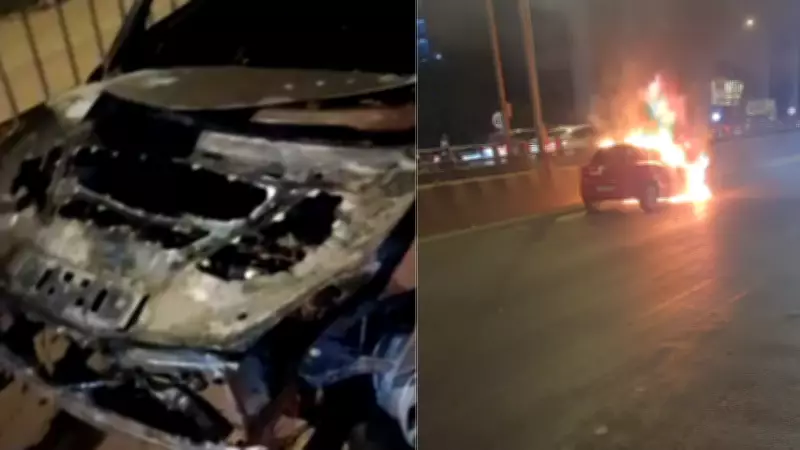
Mumbai Grapples with Alarming Surge in Vehicle Fire Incidents
Between January 2025 and mid-February 2026, Mumbai reported a concerning total of thirty-two incidents where vehicles suddenly caught fire on city roads. These dangerous events have not only posed significant risks to road users but have also severely disrupted vehicular traffic across the metropolitan area. The frequency of these fires highlights a growing public safety issue that demands immediate attention from authorities and vehicle owners alike.
Recent Incidents on Western Express Highway Highlight Urgent Concerns
In the first two weeks of February 2026 alone, two separate vehicle fire incidents occurred on busy arterial roads during peak traffic hours, exacerbating congestion and safety worries. The most recent incident took place on February 11 on the southbound arm of a flyover on the Western Express Highway in Goregaon East. At approximately 7:20 PM, a car unexpectedly burst into flames while police had opened a counter lane to manage traffic congestion. The fire brigade responded promptly, extinguishing the blaze by 7:40 PM. Subsequently, police arranged for a crane to tow the charred vehicle to a safe parking location under the flyover.
Just four days earlier, on February 7, another car fire erupted at 10:00 PM on the northbound arm of the Western Express Highway at Vile Parle. Firefighters managed to control the flames by 10:30 PM, and after towing away the damaged vehicle, normal traffic flow resumed by 10:35 PM. Fortunately, both incidents resulted in no casualties, with officials attributing the probable cause to short circuits stemming from wiring issues.

Expert Analysis Points to Rodent Menace and Electrical Faults
Fire safety experts have identified electrical faults as a likely primary reason for these sudden vehicle fires, with retired fire officer Rajendra Chaudhary emphasizing the rodent menace in parking areas as a key contributing factor. "Once a vehicle is parked overnight, rats can infiltrate and gnaw at electrical wiring and fuel pipes," Chaudhary explained. "This damage can lead to petrol leaks. If leaked fuel comes into contact with a heated engine while driving, the result could be a sudden and dangerous fire."
Chaudhary further noted that tampering with a car's electrical system during accessory installations represents another causal factor for fires. However, he highlighted that fires in electric vehicles present particularly challenging scenarios for firefighting efforts. "A fire in a small electric car could require thousands of litres of water to extinguish," Chaudhary stated, pointing to battery issues as typically being the key reason for fires in electric vehicles.
Traffic Disruption and Safety Appeals from Authorities
The aftermath of vehicle fires creates substantial traffic disruptions, with joint commissioner of traffic Anil Kumbhare detailing the operational challenges. "It could take anywhere between 30 to 40 minutes for the entire process of extinguishing flames in a burning vehicle, cooling it down, and towing it away," Kumbhare explained. "During this period, the affected stretch becomes blocked, resulting in massive traffic backlogs that inconvenience countless commuters."
Authorities are making urgent appeals to motorists regarding vehicle maintenance and safety precautions. "We want to appeal to motorists to maintain their vehicles regularly as a sudden fire endangers the lives of all road users," Kumbhare emphasized, underscoring the broader public safety implications beyond individual vehicle damage.
The combination of electrical vulnerabilities, environmental factors like rodent infestations, and potential human modifications to vehicle systems creates a perfect storm for fire incidents. As Mumbai continues to experience rapid urbanization and increasing vehicle density, addressing these fire safety concerns through public awareness campaigns, improved parking management, and regular vehicle inspections becomes increasingly critical for protecting both lives and infrastructure.