Punjab Government's Decision to Paint Schools in AAP Colors Ignites Major Political Controversy
The Bhagwant Mann-led Aam Aadmi Party government in Punjab has found itself at the center of a significant political storm following its controversial directive to paint government schools in the distinctive colors of the party flag. This move has triggered widespread condemnation from opposition parties, who are accusing the ruling dispensation of blatantly politicizing the education sector and compromising the sanctity of learning institutions.
Opposition Parties Launch Scathing Attacks on AAP Government
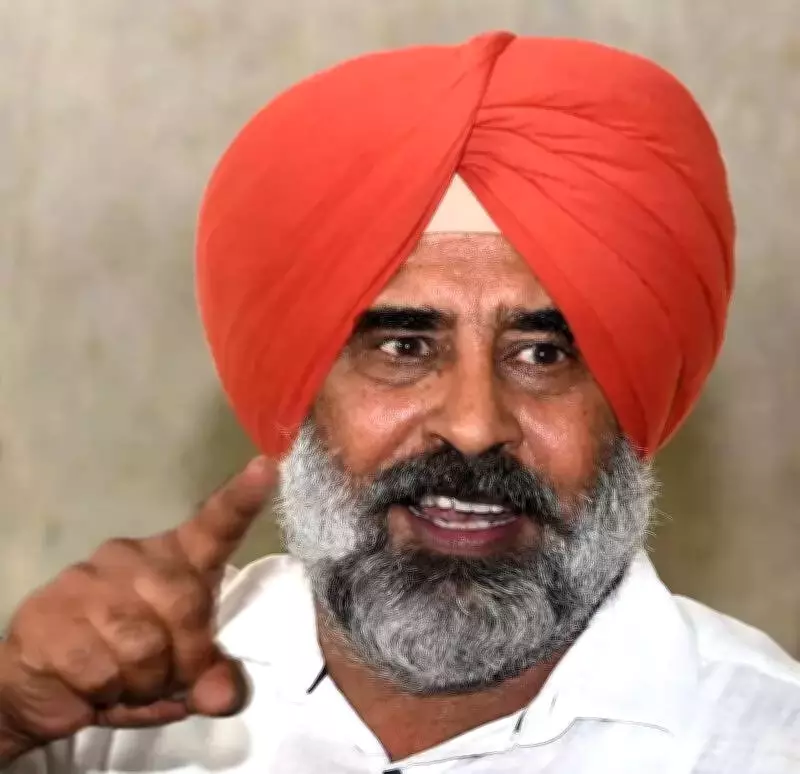
Former education minister and Congress MLA Pargat Singh launched a particularly sharp critique, accusing the AAP of crossing what he termed the "conceivable line of hypocrisy." In his strongly worded statement, Singh drew parallels between AAP's actions and what he described as the Rashtriya Swayamsevak Sangh-Bharatiya Janata Party's historical agenda of imposing ideology on young minds through educational institutions.
"Now, treading the exact same despicable path, AAP issued a brazen order to paint Punjab's government schools in the colors of their party flag," Singh asserted. "This is not just shameful; it is an assault on the sacred principles of education." The Congress leader demanded the immediate withdrawal of what he called a "dictatorial fiat" before it causes what he warned would be irreversible damage to the state's educational framework.

Concerns About Educational Sanctity and Political Interference
Pargat Singh further elaborated on his objections, characterizing the paint directive as a direct attack on children's freedom and the fundamental sanctity of the learning process. He argued that instead of focusing on substantive improvements to school infrastructure, providing quality teachers, and fostering nurturing educational environments, the AAP government was choosing to desecrate schools by saturating them in partisan political hues.
"Indian National Congress will not stand idly by," Singh declared emphatically. "Punjab's people will rise in fury against this abomination. It is the government's solemn duty to keep education insulated from the toxic grip of politics."
SAD (Punar Surjeet) Joins the Criticism
The criticism was not limited to the Congress party. Giani Harpreet Singh, president of the Shiromani Akali Dal (Punar Surjeet), added his voice to the growing chorus of disapproval on Friday. He labeled the government's decision as "not only deeply shameful but also posing a serious threat to the education system."
To substantiate his claims, Giani Harpreet Singh shared a post on social media platform X, attaching what appears to be a December 22, 2025 letter from the office of the Director General School Education-cum-State Project Director Samagra Sikhya. This document reportedly outlines plans for the whitewashing and painting of 852 government middle, high, and senior secondary schools in the first phase, specifying color codes for various elements including walls, corridors, doors, and windows.
"Schools and children are not propaganda tools for any political party," the SAD leader stated firmly. "Attempting to impose a party's identity by bringing children and educational institutions under political influence is condemnable and directly contradicts the fundamental principles of education."
Government Response and Broader Implications
Despite repeated attempts by media outlets to seek clarification or comment on the controversy, Education Minister Harjot Singh Bains remained unavailable for statements. This silence from the government side has only fueled further speculation and criticism regarding the intent and implications of the paint directive.
The controversy raises significant questions about the boundaries between political branding and public institutions, particularly in the sensitive realm of education. Opposition parties are framing this as part of a larger pattern of political overreach, while the government's stance remains officially unarticulated as the debate intensifies across Punjab's political landscape.