In a significant move concerning voter inclusion in West Bengal, Leader of Opposition Suvendu Adhikari has formally requested the Election Commission of India to accept employment records from tea and cinchona plantations as valid proof of identity and residence. This appeal is specifically for the ongoing Special Intensive Revision (SIR) of the electoral rolls.
A Letter for the Marginalised
On Tuesday, January 7, 2026, the BJP leader wrote to Chief Election Commissioner Gyanesh Kumar. Adhikari's letter champions the cause of marginalised communities residing in North Bengal's key districts. These include Darjeeling, Kalimpong, Jalpaiguri, Cooch Behar, Alipurduar, and North & South Dinajpur.
He argued that these regions, characterized by vast tea and cinchona plantations, are home to a massive workforce that forms the backbone of a crucial agro-industry. Despite generating billions in annual export revenue and employing lakhs, these workers often face exclusion from democratic processes due to a lack of standard documentation.
Political Allegations and a Contrast in Advocacy
In his communication, Adhikari launched a sharp political attack on Chief Minister Mamata Banerjee. He alleged that while the Trinamool Congress chief has repeatedly written to the CEC to halt the SIR exercise, purportedly to protect the interests of ineligible voters, she has never found the time to appeal for the inclusion of eligible tea garden and forest-dwelling voters.
"Mamata Banerjee has never found time to address the distress and hardships faced by eligible voters, or to make an appeal to you regarding their unfortunate situation," the letter stated, drawing a clear line between the two leaders' priorities.
The Core Demand: Flexible Documentation for Inclusion
The central plea from the Leader of Opposition is for the Election Commission to recognize plantation employment records as official proof. Adhikari emphasized that for many workers and forest dwellers, these are the only reliable documents that detail employment, residence, and family information.
"These records have historically served as de facto proof in labour disputes and welfare schemes, making them credible alternatives where standard identifications are absent," he noted. He highlighted the poor implementation of The Scheduled Tribes and Other Traditional Forest Dwellers (Recognition of Forest Rights) Act, 2006 in the state, which has left many without formal land records in their names.
Adhikari mentioned that a similar request was first made by BJP MP Raju Bista to the state's Chief Electoral Officer in November 2025. He also stated that BJP MLAs from tea garden areas have advocated for verifying workers' documents under the Forest Rights Act.
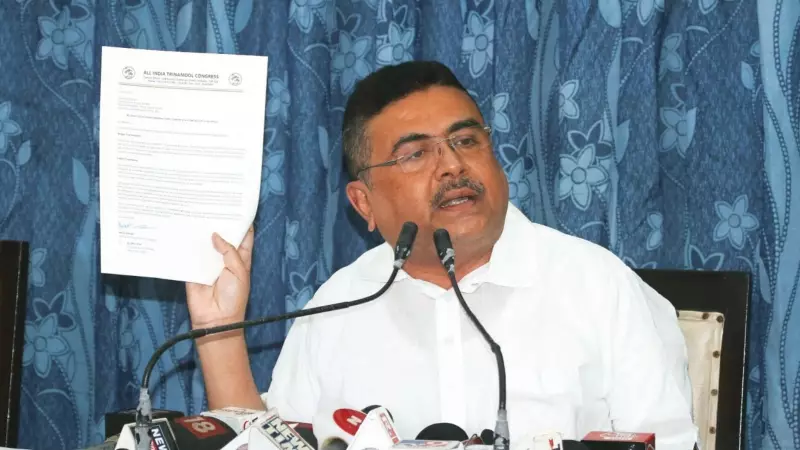
Addressing a press conference alongside MP Manoj Tigga, Adhikari pointed out the practical difficulties faced by the communities. "Many of them do not have school certificates. They practically do not have any papers," he said, underscoring the necessity for a flexible documentation policy to ensure no eligible voter is left out.
Looking ahead, Suvendu Adhikari announced plans to meet with tea garden workers on January 24, 2026, to better understand their problems firsthand. He expressed hope that the Election Commission would accept this "reasonable request" to uphold the principles of equity and universal adult suffrage enshrined in the Constitution, ensuring a complete and inclusive voter list for West Bengal.