

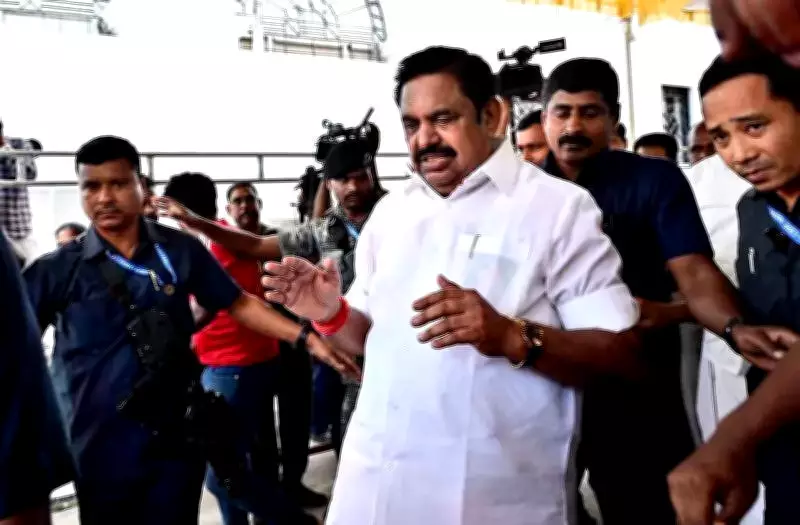
AIADMK Leader Accuses DMK of Election-Driven State Autonomy Demand
In a heated session of the Tamil Nadu assembly, AIADMK general secretary Edappadi K Palaniswami launched a sharp critique against the ruling DMK government. This came just a day after the DMK tabled a report by Justice Kurian Joseph advocating for greater state autonomy. Palaniswami alleged that the DMK is raising this issue strategically, with an eye on the approaching assembly elections, rather than out of genuine concern for state rights.
Historical Silence Questioned in State Autonomy Debate
Speaking on the assembly floor, Palaniswami pointedly questioned the DMK's past actions. He highlighted that the DMK was part of Union governments led by various parties, including the BJP and Congress, for approximately 15 years, as well as under Prime Ministers I K Gujral and Deve Gowda. "The issue of state autonomy never came to your mind during then," he asserted. "Now, as elections draw near, you are speaking about state autonomy to mislead the people." This accusation underscores a long-standing political rivalry, with Palaniswami framing the DMK's move as opportunistic.
DMK Defends Autonomy Push Amid Growing National Consensus
In response, Law Minister S Regupathy defended the DMK's position, emphasizing that the need to press for state autonomy is stronger than ever in the current political climate. He argued that other states across India have also recognized this necessity, indicating a broader trend towards decentralization. Regupathy announced that the Chief Minister plans to circulate the report from the 'High Level Committee Union-State Relations' to unite like-minded states, aiming to build a coalition for greater regional powers.

Heated Exchange Over NEET and Investment Figures
The debate quickly escalated beyond state autonomy, spilling into other contentious issues. A heated exchange erupted over the National Eligibility cum Entrance Test (NEET). Palaniswami noted that the Congress-led UPA government issued the notification for NEET in December 2010, and the DMK, as part of that Union government, raised no objections at the time. In rebuttal, DMK Minister Geetha Jeevan countered that states previously had the authority to decide on NEET, but it was made mandatory by the subsequent BJP-led government, shifting blame to national policies.
Further intensifying the confrontation, Palaniswami demanded a white paper on investments attracted by the Tamil Nadu government. Citing Union government data, he alleged that Tamil Nadu secured only about 74,300 crore in foreign direct investment over the last three years, suggesting underperformance in economic growth.
State Government Counters with Economic Achievements
State Industries Minister T R B Raja provided a robust defense against the investment claims. He explained that many foreign firms investing in Tamil Nadu route their funds through Indian headquarters located in Delhi or Gurugram, causing the investment figures to be reflected in those states instead. Raja emphasized that nearly 70% of the Memorandums of Understanding (MoUs) signed by the state have been realized, showcasing effective implementation. He also highlighted Tamil Nadu's leadership in manufacturing and pointed to the state's impressive growth rate of 11.19%, which significantly surpasses the national average of 6.9%.
This assembly session underscores the deepening political divisions in Tamil Nadu as elections approach, with debates centering on governance, autonomy, and economic performance. The exchanges reflect broader national tensions between state and central powers, making this a critical issue for voters in the upcoming polls.






