

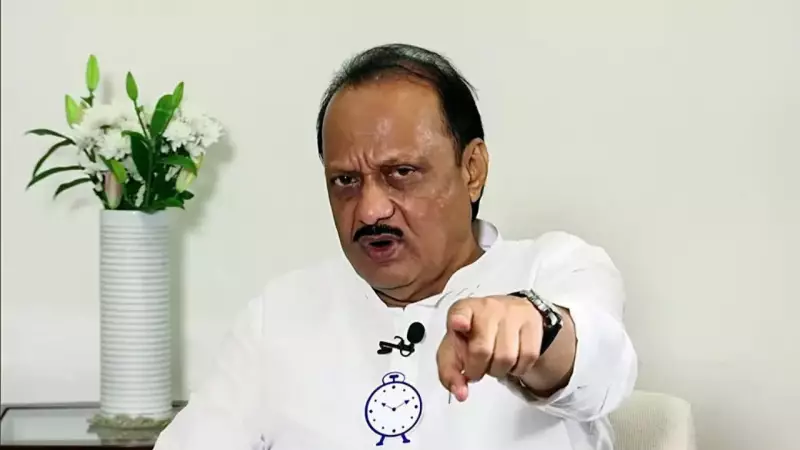
Maharashtra Deputy Chief Minister Ajit Pawar defended his political move on Tuesday. He explained his decision to join forces with Sharad Pawar's faction of the Nationalist Congress Party. This alignment comes just before crucial local body elections in Pune and Pimpri-Chinchwad.
Preventing Vote Split Drives Alliance
In a detailed interview with ANI, Pawar clarified the reasoning behind the joint strategy. He stated that party workers from both NCP factions pushed for this alliance. They recognized a clear danger. If both groups contested separately, votes would split between them. This division could cost them the election.
"The workers knew that if they contested against each other, the votes would be split," Pawar emphasized. "That was something they wanted to avoid at all costs. The workers wanted to win the election."

He credited grassroots efforts for finding this solution. Some members from both parties worked hard to bridge the gap. Their goal was simple: secure a victory for the NCP ideology in the region.
Future Merger Not on Immediate Agenda
When questioned about a potential full merger of the two NCP factions, Pawar provided a cautious response. He indicated that such a significant step requires more thought. "We haven't thought about that yet," he admitted.
Pawar pointed to the immediate electoral pressure. With campaigning ending, the focus remains on ensuring smooth voting. He stressed that any future merger talks must involve top leaders from both sides, not just the party workers.
"Leaders run the party, so we need to have discussions first," Pawar explained. He made it clear that karyakartas alone cannot decide such a major organizational shift.
Denying Rifts Within the Ruling Alliance
Ajit Pawar firmly dismissed any speculation about strained relations with Chief Minister Devendra Fadnavis. His alignment with Sharad Pawar's group, he insisted, will not damage their working equation.
"No, it will not be affected. 100%, it will not happen," Pawar declared confidently. He referenced historical precedents to justify his stance. Pawar recalled the long-standing alliance between the NCP and Congress for national and state elections. Yet, in local body polls, they often contested separately to empower their own workers.
He drew a parallel with the BJP and Shiv Sena. "In the 2017 elections in Mumbai and Thane, they were fighting against each other," Pawar noted. "So, there's no need to think that something very different is happening here."
Government Stability Remains Unaffected
Pawar provided assurances about the stability of the Maharashtra government. The three major parties—BJP, NCP, and Shiv Sena—are contesting these local polls separately. Despite this competition, they have all agreed on one crucial point.
The election results, due on January 16, will not impact the day-to-day functioning of the state administration. This agreement aims to maintain governance continuity regardless of political rivalry at the municipal level.
This statement follows recent comments from CM Fadnavis. The Chief Minister had remarked on Pawar's criticism of the BJP during the campaign. Fadnavis suggested they had a prior understanding for a "friendly contest" without harsh criticism. He expressed confidence that the campaigning tone would settle after voting concludes on January 15.
Upholding Secular Values in Politics
Ajit Pawar also addressed attempts to inject communal rhetoric into the Brihanmumbai Municipal Corporation elections. He strongly condemned such tactics. Pawar reaffirmed his personal commitment to secular principles.
"I do not like this at all. I have a secular mindset," he stated clearly. He invoked the ideology of Dr. B.R. Ambedkar, emphasizing that it does not promote division. In a diverse nation like India, Pawar argued, every citizen holds equal status.
His comments arrive a day after Chief Minister Fadnavis made a specific assertion. Fadnavis declared that the next BMC mayor would be from the Mahayuti alliance, and would be both Hindu and Marathi. Pawar's stance highlights a different priority, focusing on inclusive citizenship over identity politics.






