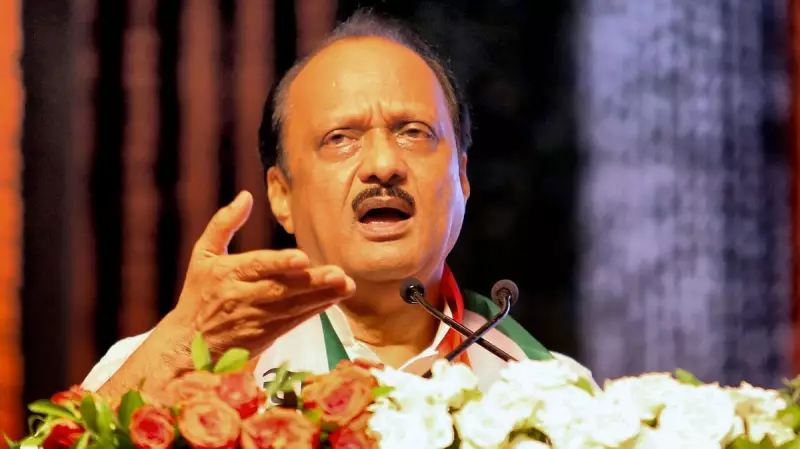
Maharashtra's Deputy Chief Minister, Ajit Pawar, has launched a sharp critique against the current state of Indian politics, accusing parties of abandoning their core ideologies and resorting to unethical practices to gain power. He made these pointed remarks during a public event, highlighting a growing concern over the degradation of political discourse and strategy.
The Core Critique: Ideology Takes a Backseat
Pawar, a senior leader of the Nationalist Congress Party (NCP), expressed his dismay at how political organizations are increasingly sidelining their foundational principles. He stated that the primary focus for many has shifted from serving the public based on a clear ideological framework to simply winning elections by any means necessary. This trend, he argued, is detrimental to the health of a democracy where parties should offer distinct choices to the electorate.
The veteran politician specifically pointed to the rampant practice of 'poaching' leaders and legislators from rival parties. He lamented that this is now frequently achieved not through persuasive ideological alignment, but through the sheer use of financial inducements and muscle power. This creates an environment where political loyalty is for sale, undermining stable governance and principled politics.

Money and Muscle Over Mandate
Elaborating on the methods employed, Pawar underscored the dangerous role of money power and intimidation in shaping political outcomes. The 'fear' factor, combined with lucrative offers, is used to engineer defections and destabilize elected governments. This practice, often seen in the form of party-switching by MLAs, has been a recurring feature in Maharashtra and other states, leading to accusations of political horse-trading.
His comments are seen as a significant observation from an experienced insider who has witnessed decades of political maneuvering in one of India's most politically dynamic states. While not naming any specific party, the critique is broad and implicates a widespread malaise in the political system.
A Call for a Return to Principled Politics
The Deputy Chief Minister's speech concluded with an implicit call for reform. By highlighting the erosion of ideology, he appealed for a return to a more issue-based and value-driven political competition. The underlying message is that the health of the nation's democracy depends on parties that stand for clear beliefs and policies, rather than those that function merely as electoral machines powered by capital and coercion.
This critique from a sitting Deputy CM adds considerable weight to the ongoing debate about the need for stricter anti-defection laws and more transparent political funding. It signals a concern shared by many about the direction in which political contests are headed, where short-term gains often trump long-term vision and integrity.