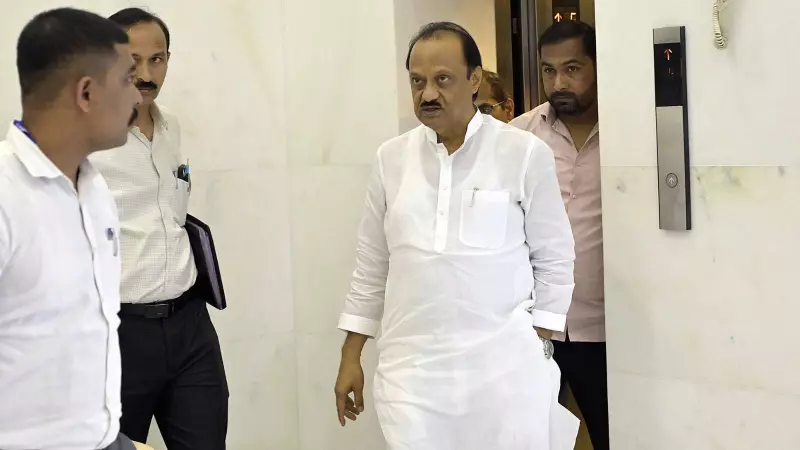
In a dramatic escalation of tensions within Maharashtra's ruling coalition, Deputy Chief Minister and Nationalist Congress Party (NCP) leader Ajit Pawar has launched a scathing public attack on his ally, the Bharatiya Janata Party (BJP). The outburst, centered on allegations of corruption and intimidation during ongoing local body elections, has pushed the already uneasy Mahayuti alliance to the brink of a public crisis.
A Calculated Strike Amid Civic Polls
The political storm erupted last Friday, January 2, 2026, as Maharashtra witnessed a complex web of electoral alliances for municipal polls. Breaking from the coalition's agreed-upon decorum, Ajit Pawar, whose NCP has partnered with the rival NCP (Sharadchandra Pawar) for these elections, directly targeted the BJP's past governance. He focused his criticism on the BJP's tenure in the Pimpri-Chinchwad Municipal Corporation from 2017 to 2022.
"The aim is to slay the demon of corruption," Pawar declared, accusing his allies of being "power hungry" and presiding over "open loot." He contrasted this with the development he claimed occurred under his and his uncle Sharad Pawar's leadership from 1991 onwards, asserting, "We never got power hungry."
Uncontested Wins and Veiled Threats
Pawar further sharpened his critique by commenting on the high number of candidates elected unopposed in the current polls, a phenomenon that has drawn scrutiny. While acknowledging that unopposed wins happened during his party's tenure too, he claimed they followed democratic norms. "Today, there is so much terror in some areas that candidates are afraid to file their nominations," he alleged.
This remark came as the BJP and its Shiv Sena allies won 68 out of 69 no-contest seats across various municipal corporations, prompting the Maharashtra State Election Commission (SEC) to put result declarations on hold and seek reports from local officials.
The BJP's response was swift and severe. State BJP president Ravindra Chavan issued a veiled warning, telling Pawar to "look into your own backyard." He added, "We regret our alliance with Ajit Pawar. I had warned party leaders against the alliance with NCP." Senior BJP minister and Revenue Minister Chandrashekhar Bawankule advised his cabinet colleague to be "careful while speaking in public," reminding him of their alliance status.
The Realpolitik Behind the Rift
Analysts view Pawar's unexpected aggression as a move driven by hard political calculations. The rapprochement between the two NCP factions was partly to keep the BJP out of their strongholds of Pune and Pimpri-Chinchwad. Meanwhile, the BJP, with 137 MLAs in the 288-member Assembly, seeks to expand its grassroots presence to reduce future dependence on allies.
For the BJP, the attack on corruption is particularly sensitive, as it forms a core part of its governance pitch. A senior BJP minister, speaking anonymously, retorted, "We don't need a certificate from Ajit Pawar on credibility." Another leader indirectly referenced the Rs 70,000 crore irrigation scam in which Pawar had faced legal troubles, hinting it could be revived.
However, the BJP's ability to counterattack on corruption is complicated, as they embraced Pawar into the alliance despite these past allegations. Pawar himself referenced this paradox, questioning what happened to those charges now that he sits alongside his former accusers.
The public fissure marks a significant shift in the alliance's dynamics, where Pawar had previously shared a cordial relationship with key BJP leaders like Deputy CM Devendra Fadnavis. The episode underscores the fragile nature of coalitions built on expediency rather than shared ideology, setting the stage for further political maneuvering in Maharashtra.