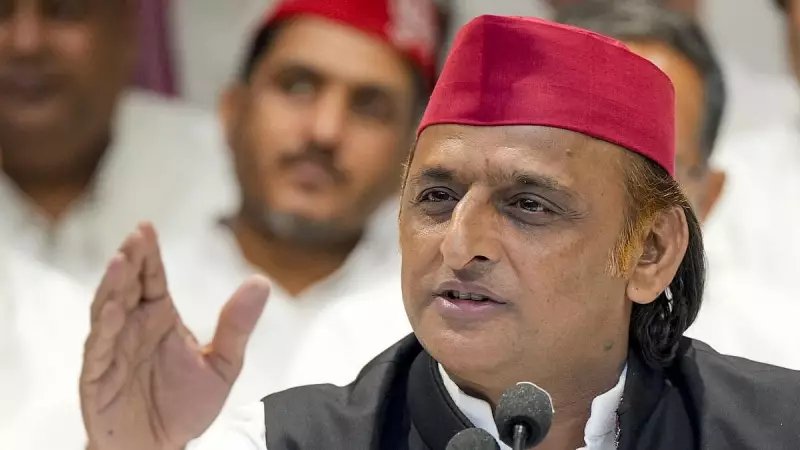
Samajwadi Party president Akhilesh Yadav has launched a scathing attack on the Election Commission, demanding substantial compensation for families affected by the ongoing special summary revision of electoral rolls in Uttar Pradesh. The former chief minister has called for ₹1 crore compensation for each death that he claims is linked to the voter ID deletion drive across the state.
Political Confrontation Over Voter List Revision
The controversy erupted during the ongoing special summary revision of electoral rolls, which opposition parties allege has led to widespread deletion of legitimate voters. Akhilesh Yadav has directly blamed the Election Commission for what he describes as unexplained deaths connected to the SR drive. While specific details about the number or circumstances of these deaths weren't elaborated in his statement, the political leader has made this a central issue in his ongoing confrontation with the election body.
Yadav's demand comes amid rising tensions between opposition parties and the Election Commission regarding the voter list verification process. The Samajwadi Party chief has positioned himself as championing the rights of potentially disenfranchised voters, particularly targeting the commission's implementation of the revision process in India's most populous state.
Escalating Rhetoric and Electoral Implications
This isn't the first time Akhilesh Yadav has criticized the Election Commission's handling of the voter list revision. However, his latest statement marks a significant escalation by attaching specific financial responsibility to the electoral process. The demand for ₹1 crore per death establishes a new benchmark in political accountability demands against constitutional bodies.
The timing of this demand is particularly significant given Uttar Pradesh's crucial position in national politics. As the state that sends the largest contingent of MPs to Parliament, any controversy surrounding voter registration inevitably carries major implications for upcoming elections. Yadav's statement reflects the high-stakes nature of electoral politics in the state, where even minor changes in voter lists can potentially alter electoral outcomes.
Broader Political Context and Reactions
The special summary revision of electoral rolls is a routine exercise conducted by the Election Commission to update voter lists and remove duplicate or ineligible entries. However, opposition parties have repeatedly alleged that the current process is being misused to target certain voter demographics. Akhilesh Yadav's compensation demand represents the most dramatic response to these concerns to date.
Political observers note that this development signals increasing polarization around electoral processes in India. The direct financial compensation demand sets a new precedent in political accountability measures and could influence how other opposition parties approach similar issues in their respective states. The Election Commission now faces mounting pressure to address these allegations while maintaining its constitutional mandate of conducting free and fair elections.
As the situation develops, all eyes remain on how the Election Commission will respond to these serious allegations and whether other political parties will join the Samajwadi Party in demanding accountability for what they perceive as irregularities in the voter registration process.