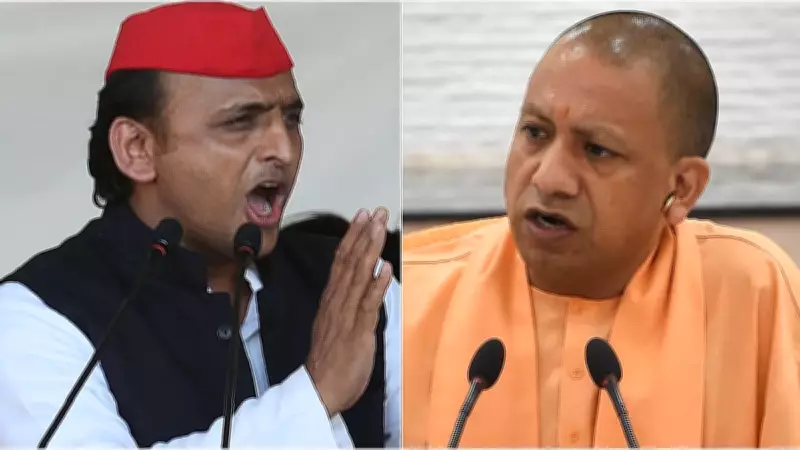
Akhilesh Yadav Challenges Yogi Adityanath's Title in Political Spat
Samajwadi Party president Akhilesh Yadav has launched a sharp critique against Uttar Pradesh Chief Minister Yogi Adityanath, questioning his right to use the 'Yogi' title. This controversy erupted following Adityanath's recent remarks referencing Shankaracharya, which have ignited a heated political debate in the state.
Political Confrontation Over Religious Identity
In a statement that has reverberated through Indian political circles, Akhilesh Yadav asserted, 'One does not become a Yogi merely by wearing saffron robes.' This direct challenge targets the Chief Minister's public persona, which is closely tied to his religious attire and monastic background. The Samajwadi Party leader further demanded to know who authorized Adityanath to adopt the 'Yogi' prefix before his name, adding a layer of institutional questioning to the personal attack.
Context of the 'Shankaracharya' Remark
The confrontation stems from Yogi Adityanath's recent comments where he invoked the legacy of Shankaracharya, the revered 8th-century Hindu philosopher and theologian. While the exact content of Adityanath's statement hasn't been fully detailed in reports, it appears to have touched upon themes of religious leadership and political authority, prompting Akhilesh Yadav's rebuttal. This exchange highlights the ongoing tension in Uttar Pradesh politics where religious symbolism often intersects with governance and electoral strategy.

Broader Implications for Uttar Pradesh Politics
This verbal skirmish between two of Uttar Pradesh's most prominent political figures is not merely a personal dispute but reflects deeper ideological divides:
- Identity Politics: The debate centers on the appropriation of religious titles for political gain, a sensitive issue in India's diverse social landscape.
- Electoral Positioning: With state politics constantly evolving, such exchanges are often precursors to larger campaign narratives ahead of elections.
- Governance vs. Symbolism: Critics argue it shifts focus from administrative performance to symbolic gestures, while supporters see it as affirming cultural values.
The timing of this controversy, as reported on February 14, 2026, suggests it may influence upcoming political maneuvers in India's most populous state. Both leaders have substantial followings, and their public disagreements frequently capture national attention, shaping discourse around secularism, religious representation, and political legitimacy in contemporary India.