

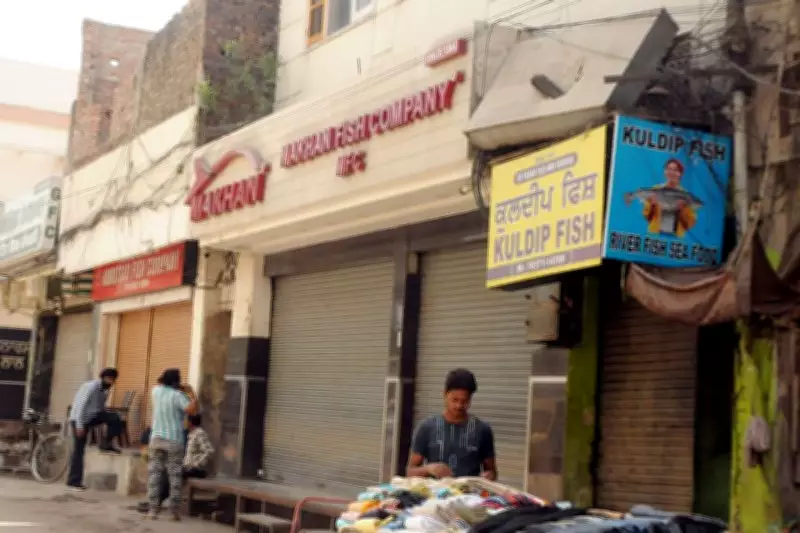
Amritsar Fish Sellers Decry Forced Market Closure, Urge Municipal Corporation for Relocation
Fish sellers in the historic city of Amritsar have raised strong objections against the Municipal Corporation (MC), alleging a forced and abrupt closure of their traditional market. The vendors, who have been operating in the area for decades, claim that the shutdown was executed without prior notice or consultation, severely impacting their livelihoods and disrupting the local supply chain for fresh seafood.
Vendors Demand Immediate Alternative Site
The aggrieved fish sellers are now vociferously demanding that the Municipal Corporation provide them with an alternative, designated site to resume their business operations. They argue that the closure not only threatens their economic survival but also inconveniences countless residents who rely on this market for their daily fish purchases. Many of these vendors come from families that have been in the trade for generations, and they view the move as an unjust disruption of their cultural and economic heritage.
The sellers have highlighted the lack of transparency in the MC's decision-making process, emphasizing that no viable relocation plan was presented before the enforcement of the closure. This has left them in a state of uncertainty, with no clear path forward to sustain their incomes. The situation has sparked concerns about the broader implications for small-scale traders in the city, who often operate in informal sectors with limited legal protections.

Municipal Corporation's Stance and Public Reaction
While the Municipal Corporation has yet to issue an official statement detailing the reasons behind the market closure, sources suggest that it may be part of a larger urban development or sanitation initiative. However, the absence of communication has fueled frustration among the vendors, who feel marginalized and ignored by the authorities. Local residents have also expressed solidarity with the fish sellers, noting the market's role in providing affordable and fresh produce to the community.
The protest has gained momentum, with vendors planning to escalate their demands through peaceful demonstrations and appeals to higher administrative bodies. They are calling for a swift resolution that includes not only a new site but also basic amenities such as proper sanitation, water supply, and security to ensure a conducive environment for their trade. The incident underscores the ongoing challenges faced by informal sector workers in rapidly urbanizing areas, where development projects often clash with traditional livelihoods.
As the standoff continues, the fish sellers remain hopeful for a constructive dialogue with the Municipal Corporation. They urge the authorities to consider the socio-economic impact of such closures and to adopt a more inclusive approach in urban planning, one that balances modernization with the needs of local communities.






