

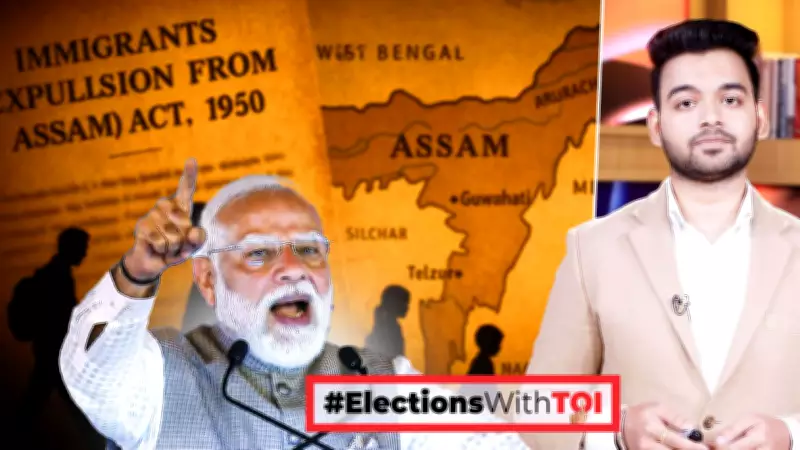
Assam's 1950 Immigrants Act: A Political Flashpoint in 2026 Elections
The Immigrants (Expulsion from Assam) Act of 1950 has resurfaced as a central issue as Assam approaches the 2026 Assembly elections. This long-dormant legislation is now at the forefront of political discourse, with the Bharatiya Janata Party (BJP) championing its implementation to address illegal immigration.
Understanding the 1950 Act and Its Fast-Track Mechanism
The Act empowers district officials to order expedited deportations of individuals deemed illegal immigrants, effectively bypassing the protracted procedures typically associated with foreigner tribunals. This provision allows for swift administrative action, which has become a key talking point in the current electoral climate.
Prime Minister Narendra Modi has intensified the political rhetoric by accusing the Congress party of supporting infiltrators. In contrast, the BJP has pledged to enforce the Act on a daily basis, framing it as a crucial measure to safeguard Assam's indigenous identity and cultural heritage.

Legal and Political Implications of the Act's Revival
The Act's recent invocation in the Sonitpur district has ignited widespread debate. Legal experts and political analysts are scrutinizing its scope, particularly concerning exceptions for refugees and the potential for misuse. These discussions highlight the delicate balance between national security concerns and humanitarian considerations.
With the 2026 elections drawing near, the Immigrants Act has transformed into a significant electoral flashpoint. It is influencing voter sentiment and shaping campaign strategies across the political spectrum. The BJP's emphasis on this issue underscores its commitment to addressing illegal immigration as a core component of its governance agenda in Assam.
Electoral Dynamics and Future Outlook
The resurgence of the 1950 Act is not merely a legal matter but a potent political tool that could sway election outcomes. Its implementation raises questions about procedural fairness, human rights, and the broader impact on Assam's social fabric. As political parties navigate these complexities, the Act remains a focal point in debates over identity, security, and electoral promises.
Observers note that the BJP's push for fast-track deportations aligns with its broader narrative of protecting indigenous communities, while opponents warn of potential overreach and discrimination. The coming months will likely see intensified discussions as stakeholders assess the Act's role in shaping Assam's political future.






