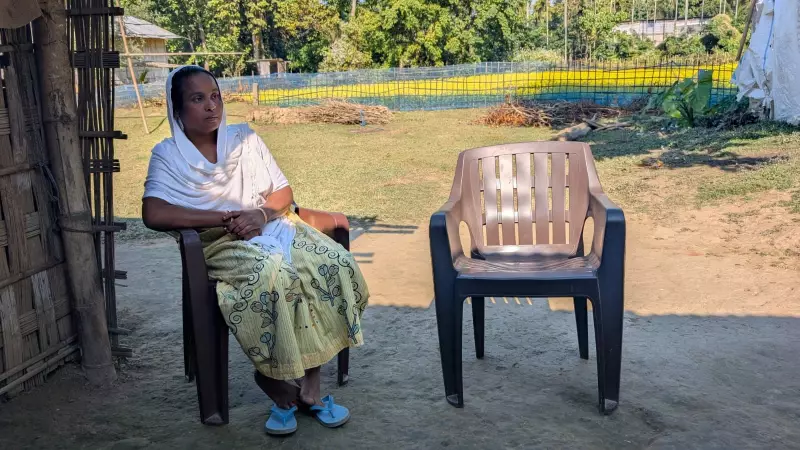
In a stark illustration of the human cost of Assam's renewed deportation drive, families of 15 individuals expelled to Bangladesh last month are left grappling with uncertainty and fear. For most, there has been no communication since their relatives were taken from the Matia transit camp on December 19. The sole exception came through a desperate midnight WhatsApp call from a borrowed phone, offering a fleeting and harrowing connection.
The Midnight Call and a Trail of Uncertainty
The story of Adilur Zaman underscores the trauma. Around a week after his mother, Aheda Khatun (46), was ordered to leave India, he received a call on WhatsApp from an unknown number. It was his mother, calling from a borrowed device. She was disoriented and crying, stating she was "somewhere near Dhaka in Bangladesh." She narrated a terrifying journey of being dropped from a vehicle at night, walking through a jungle for two days, and surviving on railway platforms and trains before an e-rickshaw driver offered shelter.
"She hasn't even travelled to Nagaon (their local district headquarters) alone in her life," said Adilur, a vegetable seller from Juria in Nagaon district. His mother was one of the 15 individuals, all declared foreigners by Foreigners Tribunals (FTs), who were served "expulsion orders" on December 17. The orders directed them to "remove" themselves from India within 24 hours.
Another family received a brief, indirect update. Mustafa Ali, a neighbour of deported Hussain Ali, reported that Hussain's wife Jahura received a video call about a week later from a person claiming to be from the Border Guard Bangladesh. They showed Hussain on the call, confirmed his identity, and stated he was found alone near a railway line in Phultola, Bangladesh, and handed over to railway police. The family was not allowed to speak to him.
Legal Process Bypassed, Families Await Court Hearings
For other families, there is only silence. Ratur Rahman has no information about his father, Nazrul Islam, who was declared a foreigner in 2018. A review petition is pending before the Gauhati High Court, with the next hearing listed for January 28. "Our lawyer told us that when the matter comes before the court, we can seek some information about where he is," Rahman said.
Aheda Khatun's case highlights the legal complexities. Declared a foreigner by an FT in 2019, she appealed to the Gauhati High Court in 2025. The court dismissed her petition in August 2025, stating she failed to challenge the order "within a reasonable time." After her detention in Matia, the family approached the Supreme Court. Her lawyer, Adeel Ahmed, said they are waiting for the court to reopen after the winter break to list the matter urgently.
This expedited expulsion was made possible by the Assam government's revival of the 1950 Immigrants (Expulsion from Assam) Act. Dormant for over seven decades, it was revived in September 2025 after the state cabinet approved a Standard Operating Procedure (SOP) for its implementation. The Act allows expulsion "within a week" of an FT order, effectively bypassing the lengthy legal appeals process in higher courts.
A New Policy and Political Resolve
Assam Chief Minister Himanta Biswa Sarma has been unequivocal about the policy's intent. He stated this week that the invocation of the 1950 Act aims to bypass the legal options available after an FT order, enabling quick deportation before an applicant can mount a challenge. "We can now expel from 10,000 to 50,000 foreigners, if we can identify them," Sarma declared. He framed this as the hallmark of his government's next five years, contrasting it with the evictions from government land that marked the previous term.
This marks a significant shift from the formal deportation process, which requires mutual verification and handover to the other country. Since May 2025, the state has taken to "pushing" declared foreigners "back" across the border without bilateral discussion. The government claims the Supreme Court directed it to employ the 1950 Act for this purpose. Sarma asserted that this process eliminates the need for a treaty with Bangladesh on the issue.
As the legal battles continue in Gauhati and the Supreme Court, the human stories from Juria and other villages in Nagaon district remain defined by a single midnight call and an overwhelming void of information for the others left behind.