

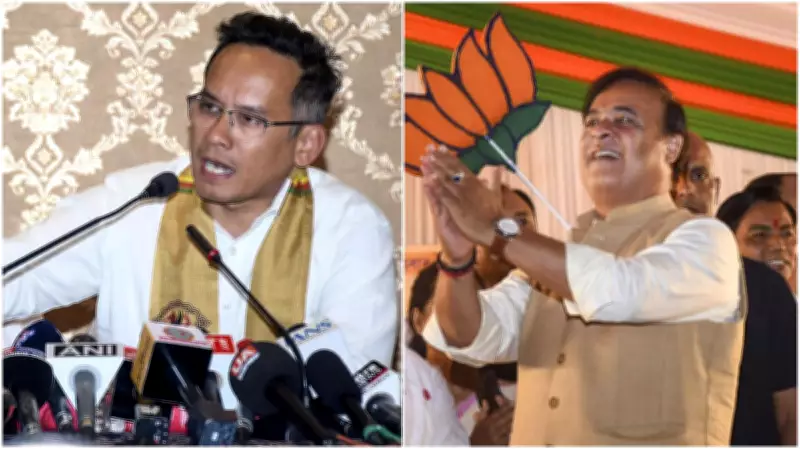
Assam CM Himanta Sarma Rejects Passport Allegations as 'Pakistani Interference' in 2026 Polls
In a fiery political exchange ahead of the crucial Assam Assembly Elections in 2026, Chief Minister Himanta Biswa Sarma has categorically dismissed allegations made by Congress leader Gaurav Gogoi regarding his passport. Sarma labeled the accusations as a deliberate attempt by "Pakistani elements" to meddle in the state's electoral process, aiming to sway public opinion and destabilize the political landscape.
Gogoi's Challenge and Sarma's Swift Rebuttal
Gaurav Gogoi, who is spearheading the Congress-led Opposition alliance in Assam, publicly dared Chief Minister Sarma to swear on the Bhagavad Gita and deny the passport-related allegations in an open forum. This bold move was intended to put pressure on the incumbent leader and question his integrity as the election season heats up.
However, Sarma responded with a sharp and unequivocal rejection, not only denying the claims but also framing them within a broader narrative of external interference. He asserted that such tactics are part of a larger strategy to influence the upcoming polls, suggesting that forces from across the border are actively working to undermine the democratic process in Assam.

Political Context and Electoral Implications
The timing of this controversy is significant, as it unfolds against the backdrop of intense campaigning for the Assam Assembly Elections scheduled for 2026. Both the ruling Bharatiya Janata Party (BJP) and the Opposition Congress are gearing up for a high-stakes battle, with each side leveraging every opportunity to gain an edge.
Gogoi's allegations and Sarma's rebuttal highlight the escalating tensions and the personal nature of the political discourse in the state. The Congress leader's call for a public oath on the Bhagavad Gita adds a religious and ethical dimension to the confrontation, potentially resonating with voters who value transparency and accountability.
Broader Implications for Indian Politics
This incident underscores the increasingly polarized and charged atmosphere in Indian politics, where allegations of foreign influence are becoming a common tool in electoral strategies. Sarma's reference to "Pakistani elements" taps into national security concerns and patriotic sentiments, which could rally his support base while discrediting the Opposition.
As the debate continues, it raises important questions about the integrity of electoral processes and the role of external actors in domestic politics. Both parties are likely to use this episode to mobilize their followers, with the Congress emphasizing accountability and the BJP focusing on national security and sovereignty.
The coming months will be critical as Assam prepares for the 2026 elections, with this controversy setting the tone for what promises to be a fiercely contested and closely watched political showdown.






