Assam's Electoral Battle: A Complex Mix of Polarization and Populism
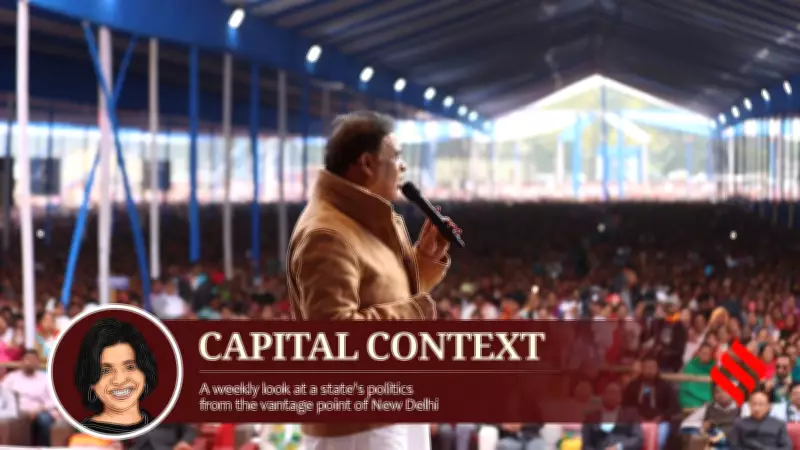
The political landscape in Assam is taking a definitive shape as the state approaches its next electoral contest. Chief Minister Himanta Biswa Sarma, a popular figure with a notable track record in governance and welfare initiatives, appears to be leveraging both development narratives and divisive rhetoric to consolidate his support base. However, this strategy has left many observers puzzled, given his administration's achievements and widespread appeal.
The Sarma Strategy: Welfare and Polarization
Chief Minister Himanta Biswa Sarma's political arsenal is robust, featuring numerous welfare schemes that directly benefit various segments of Assam's population. On New Year's Day, he announced the Babu Asoni scheme for undergraduate and postgraduate male students, alongside a Bihu gift of Rs 8,000 for 37 lakh women beneficiaries of the Orunodoi scheme. These initiatives are complemented by other programs such as Nijut Moina for girl students, Mukhya Mantri Mahila Udyamita Abhiyan for women entrepreneurs, and Jibon Prerona for graduates.
Despite these populist measures, Sarma has also been accused of playing up the "Miya" factor, referring to Bengali-origin Muslims in a pejorative context. His recent call to "trouble Miyas" drew significant backlash, yet it underscores a strategic emphasis on polarization. This approach is seen by some as a calculated move to consolidate the BJP's support base, particularly among indigenous Assamese communities who harbor fears about demographic changes.

Opposition's Internal Struggles
The Congress, out of power for a decade, remains a divided house, struggling to project a formidable alternative to Sarma's BJP. Although Gaurav Gogoi has been appointed as the state president, his relationship with many senior leaders remains strained. The party has faced embarrassing setbacks, such as last-minute withdrawals of candidates in local elections and defections of senior legislators to the BJP.
Congress's attempts to level corruption accusations against Sarma have largely failed to gain traction, with the CM effectively countering by alleging links between a Pakistan-based NGO and Gogoi's wife. This reactive posture, rather than proactive agenda-setting, has left the Congress appearing weak and fragmented.
Electoral Dynamics and Smaller Parties
Assam's electoral jigsaw includes several smaller parties and regional outfits that add layers of complexity to the political equation. The BJP-led NDA retains allies like the People's Party Liberal and the Bodoland People's Front, despite internal differences, while the Asom Gana Parishad pushes for more seats. On the other side, the Congress-led coalition includes CPI(M), Raijor Dal, and Assam Jatiya Parishad.
The All India United Democratic Front, which commands support among Bengali-origin Muslims in Lower Assam and Barak Valley, remains a key player. The Congress accuses it of dividing minority votes, thereby indirectly benefiting the BJP. Recent communal clashes in the Bodoland Territorial Region highlight growing tensions among smaller communities, yet the Congress has been unable to capitalize on these developments politically.
Underlying Socio-Political Fabric
Assam's socio-political fabric is intricately woven with religious, ethnic, and sub-regional differences. The fear among indigenous Assamese regarding Bengali-origin Muslims has been a persistent theme, reignited in current discourse. Opposition figures allege that electoral processes, such as the Special Revision of rolls and delimitation exercises, have facilitated the ghettoization of Muslims to exploit these fears for political gain.
This polarization strategy is not new; it echoes historical patterns seen during the Assam agitation between 1979 and 1985. However, its resurgence under Sarma's leadership raises questions about the necessity of such rhetoric, given his administration's developmental achievements and personal popularity.

Conclusion: A Puzzling Political Calculus
Himanta Biswa Sarma's blend of welfare populism and divisive rhetoric presents a puzzling political calculus. His connection with the people, dubbed the "Mama" or uncle figure, and his government's infrastructure improvements and law and order successes provide a strong foundation for electoral support. Yet, the early emphasis on polarization suggests a strategy to leave no stone unturned in securing a third consecutive term for the BJP.
Meanwhile, the Congress's internal divisions and lack of resources hinder its ability to mount a credible challenge. Unless it can consolidate smaller communities and minority votes under a unified leadership, the party may struggle to alter the prevailing political dynamics. As Assam heads into elections, the interplay of polarization, populism, and a fractured opposition will define the battle for power in this complex and diverse state.