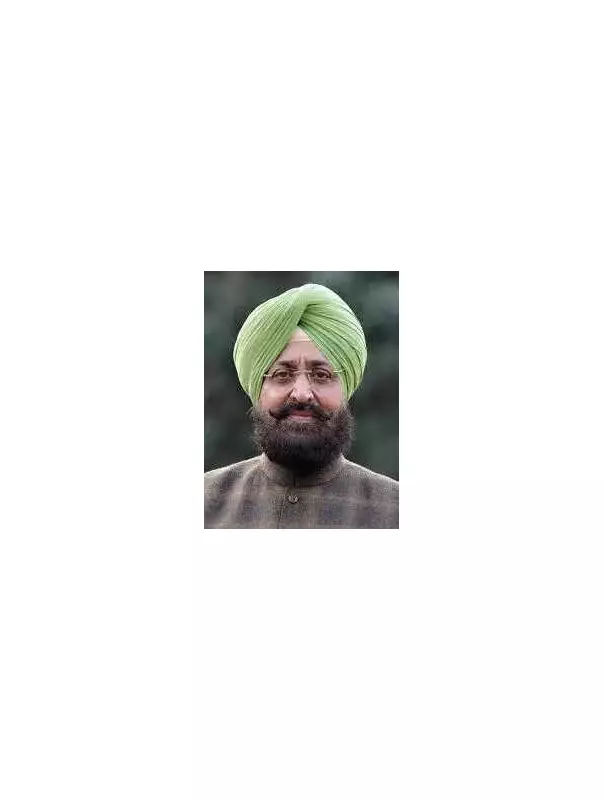
Leader of the Opposition in the Punjab Vidhan Sabha, Partap Singh Bajwa, launched a sharp attack on both the BJP-led central government and the state's Aam Aadmi Party (AAP) administration on Saturday. He accused the two of working together to erode the constitutional right to work, damage the spirit of federalism, and disrespect the dignity of the poor.
Congress Rallies in Sangrur and Rajpura
Bajwa made these allegations while addressing public gatherings as part of the Congress party's 'MNREGA Bachao Sangram' in Sangrur and Rajpura on January 10. Directly challenging Punjab Chief Minister Bhagwant Mann, Bajwa demanded that the AAP government allocate Rs 800 crore in the upcoming state budget. This amount represents Punjab's mandated 40 per cent share under the Mahatma Gandhi National Rural Employment Guarantee Act (MGNREGA).
"If the Mann government fails to allocate this amount, it must openly admit its betrayal of Punjab's poor and rural workers," Bajwa asserted. He referenced a statement by AAP minister Tarunpreet Singh Sondh, who claimed the government aimed to spend Rs 2,000 crore on MGNREGA. Bajwa insisted that such claims must be backed by clear and specific budgetary provisions.

Accusations of Hollow Slogans and Failed Promises
Targeting the AAP government's record, Bajwa accused it of surviving on empty slogans and unfulfilled promises. He listed the party's pledge of providing Rs 1,000 per month to women and its failure to increase pensions for the elderly, widows, and persons with disabilities. Taking a swipe at AAP's much-publicized anti-drug campaign, Yudh Nasheyan Virudh, he labeled it a "farce."
Bajwa further claimed that AAP supremo Arvind Kejriwal could not ensure accountability within his own party's leadership. "This government believes in theatrics, not governance," he remarked.
The Fight to Protect a Landmark Law
Recalling the enactment of MGNREGA nearly two decades ago, Bajwa described it as a landmark, rights-based law that guarantees work, wages, and dignity to rural households, with a special focus on Dalits and women. He emphasized that the Act was born from extensive consultations involving workers' unions, social movements, economists, Parliament, and the Prime Minister's Office, reflecting a broad bipartisan consensus. "The principle was clear—work is a right, not charity," he stressed.
Highlighting the scheme's impact, Bajwa said it guaranteed 100 days of employment, raised rural wages, reduced poverty, empowered women, and curbed distress migration. He noted that it served as a critical lifeline during crises like droughts and the COVID-19 pandemic.
Bajwa accused the BJP government at the Centre of systematically weakening MGNREGA since 2014 through chronic underfunding, delayed wage payments, and creating bureaucratic hurdles. He also voiced strong opposition to the proposed VB G-RAM-G Bill, arguing that it dilutes federalism, shifts financial burdens onto states, and strips workers of enforceable legal rights.
A Promise for 2027 and a Final Warning
Reiterating his core demand, Bajwa said the Mann government must prioritize rural employment over publicity expenditure and ensure timely budgetary support for MGNREGA. He declared that once the Congress forms the government in Punjab in 2027, a full and guaranteed budgetary allocation for the scheme will be ensured.
"MGNREGA is a constitutional social contract. Diluting it is an assault on dignity, federalism, and the right to life," he concluded. In a final statement, Bajwa added that under a future Congress government, no gangster would dare to harass the people of Punjab.