The Student Movement Legacy: Two Paths, Divergent Outcomes
In 1985, following a triumphant six-year campaign against illegal infiltration in Assam, the Asom Gana Parishad (AGP) emerged as a formidable political force. Born from the grassroots mobilization of the All Assam Students' Union, the AGP achieved a remarkable electoral breakthrough, securing 65 seats in the 126-member state assembly. This victory represented a seismic shift in Assam's political landscape, offering a genuine regional alternative to the long-dominant Congress party.
The Assam Success Story
The Assam Movement of 1979-1985 resonated deeply with the cultural and political aspirations of the Assamese people. What began as a protest against demographic changes evolved into a powerful political awakening that culminated in the AGP's formation. The movement's leaders successfully translated street credibility into electoral legitimacy, capitalizing on widespread discontent with established political structures.
Bangladesh's Parallel Struggle
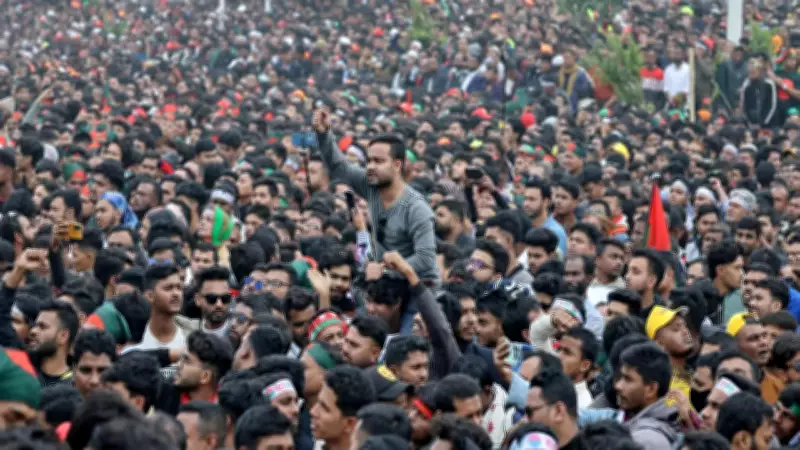
Nearly four decades later, Bangladesh experienced what appeared to be a similar political moment. The National Citizen's Party (NCP) emerged from the student-led uprising that ultimately forced Prime Minister Sheikh Hasina from office in 2024. The protests initially focused on civil service job quota reforms but rapidly expanded across Dhaka and other regions following violent police responses.

According to United Nations estimates, the security crackdown ordered by Hasina's administration resulted in approximately 1,400 fatalities. Despite this tragic backdrop and the moral authority gained through the protest movement, the NCP's electoral performance proved disappointing. The party managed to secure only 5 out of 299 parliamentary seats in the subsequent elections.
Why the NCP Faltered
Several critical factors contributed to the NCP's electoral shortcomings. Unlike their Assam counterparts, Bangladesh's student leaders struggled to convert protest momentum into political capital. The party faced significant internal divisions, operated with limited financial resources, and lacked robust grassroots organizational networks.
Strategic missteps further undermined the NCP's prospects. The decision to form an eleven-party alliance with Jamaat-e-Islami created visible fractures within the party leadership. Several prominent women leaders resigned in protest, alleging marginalization within the coalition structure. This partnership proved particularly damaging as it alienated liberal voters who had supported the student movement's inclusive democratic ideals.
Many of these disaffected voters reportedly shifted their support to Khaleda Zia's Bangladesh Nationalist Party (BNP), which ultimately secured a commanding majority with more than 151 seats in the 300-member Parliament.
Post-Election Controversies
Following their electoral defeat, NCP officials raised serious allegations of electoral manipulation. Party spokesperson Asif Mahmud Shojib Bhuyain claimed at a late-night press conference that results had been tampered with in multiple Dhaka constituencies, including Dhaka-13, 15, 16, and 17.
Bhuyain presented specific allegations regarding Dhaka-15, where he asserted that Jamaat-e-Islami's chief candidate had been leading by approximately 20,000 votes before being inexplicably declared the loser to a BNP candidate. The NCP has formally demanded recounts in several constituencies, though these allegations have not altered the broader electoral outcome.
The Governance Challenge
Beyond the immediate electoral results, the NCP's experience highlights the complex transition from protest movement to political party. Many young leaders who had demonstrated exceptional skill in organizing street protests found themselves unprepared for the nuanced demands of electoral politics and governance.
Some NCP members accepted advisory roles in the interim administration that followed Hasina's departure, hoping to contribute to what one activist described as "a beautiful Bangladesh founded on principles of peace, equality, justice, and fairness." However, this transition proved challenging for a movement accustomed to opposition rather than responsibility.

The New Political Landscape
The Bangladesh Nationalist Party's decisive victory positions Tarique Rahman to become the next Prime Minister, replacing the interim government led by Nobel laureate Muhammad Yunus. Meanwhile, Jamaat-e-Islami's eleven-party alliance appears headed for approximately 75 parliamentary seats according to media reports.
This electoral outcome underscores a fundamental political reality: successful protest movements do not automatically translate into electoral success. While the Assam movement demonstrated how regional aspirations could be channeled into political power through disciplined organization and clear messaging, Bangladesh's experience reveals how internal divisions, strategic errors, and organizational weaknesses can undermine even the most morally compelling movements.
The contrast between these two historical moments offers valuable insights into the complex relationship between street politics and electoral democracy in South Asia.