Baramati: The Political Fortress That Witnessed Ajit Pawar's Rise and Tragic End
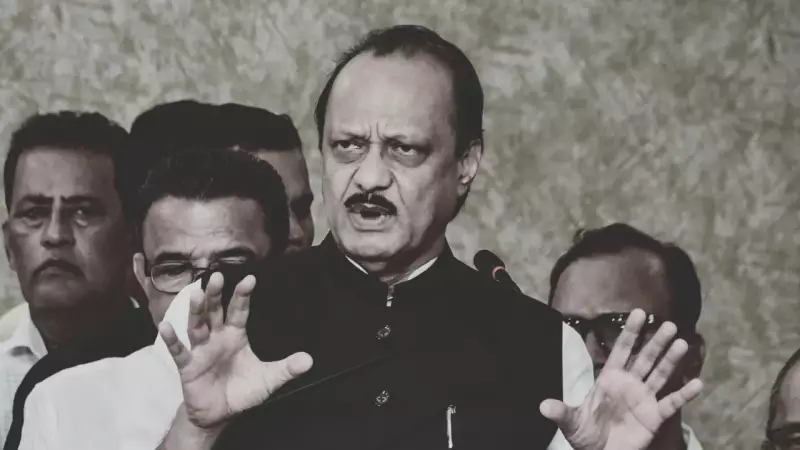
The town of Baramati, long considered the Pawar family's unshakable political bastion, witnessed both the making and the tragic conclusion of Maharashtra Deputy Chief Minister Ajit Pawar's remarkable journey. On Wednesday, this very constituency that propelled him to political prominence became the site where he breathed his last in a devastating plane crash.
A Family Stronghold Forged Over Decades
For more than half a century, Baramati has been inextricably linked with the Pawar political dynasty. Since 1967, this constituency has remained firmly under family control—first under the towering leadership of Sharad Pawar, and subsequently from 1991 onward, under his nephew Ajit Pawar. The younger Pawar initially entered electoral politics on a Congress ticket before transitioning to the Nationalist Congress Party following its formation in 1999.
Ajit Pawar's meticulous grassroots work in Baramati became the foundation of his enduring popularity. His hands-on approach and consistent engagement with constituents helped him cultivate a deeply loyal support base that would prove crucial during political upheavals.

The 2024 Verdict That Redefined Baramati's Political Landscape
November 2024 marked a watershed moment in Baramati's political history. For the first time, Sharad Pawar's authority was decisively challenged within his own family stronghold. Voters delivered Ajit Pawar a resounding victory over his grandnephew Yugendra Pawar, the NCP (SP) candidate, by an overwhelming margin of 1,00,899 votes.
This electoral verdict effectively settled the bitter battle for Baramati that had emerged from the 2023 NCP split, which saw Ajit Pawar leading one faction while his uncle Sharad Pawar headed the other. The campaign had grown intensely personal, with Sharad Pawar's camp emphasizing themes of betrayal in old age, while Ajit Pawar's supporters countered with narratives of family alienation.
Following the victory, Ajit Pawar's wife and Rajya Sabha MP Sunetra Pawar acknowledged Baramati's voters for their steadfast support. "Baramatikars have shown that they are Dada's true family," she declared, highlighting the emotional bond between the politician and his constituents.
Family Rivalries and Political Resilience
This was not the first instance where family loyalties clashed with political ambitions in Baramati. During the Lok Sabha elections, Ajit Pawar had fielded his wife Sunetra Pawar against Sharad Pawar's daughter Supriya Sule. Despite Supriya's convincing victory in that contest, which prompted Ajit Pawar to initially declare he would not contest from Baramati again, he ultimately returned to the electoral fray.
His decision to re-enter the contest and secure victory was attributed by supporters to the extensive development work he had spearheaded in the constituency over nearly four decades. This demonstrated both his political resilience and the tangible impact of his governance on Baramati's progress.
From Humble Beginnings to Political Prominence
Born on July 22, 1959, in Deolali Pravara in Rahuri taluka of Ahmednagar district, Ajit Pawar earned the affectionate moniker "Ajit Dada" through his tireless engagement with people and his remarkable ability to maintain deep connections with Maharashtra's soil and its people.
Beyond electoral politics, he played a pivotal role in managing cooperative institutions that form the backbone of rural Maharashtra's economy—including milk unions, sugar factories, and banks. These sectors have historically shaped political power dynamics across the state's rural landscape.
His formal leadership trajectory took a decisive turn in 1991 when he was elected to the Lok Sabha from Baramati, a seat he later vacated for his uncle Sharad Pawar. Ajit Pawar went on to be elected seven times to the Maharashtra Legislative Assembly from Baramati—first in a 1991 by-election and subsequently in 1995, 1999, 2004, 2009, and 2014.
Throughout his political career, he held several key positions, including minister of state for important departments and ultimately the role of deputy chief minister.

A Poetic and Tragic Full Circle
Ultimately, Ajit Pawar conquered Baramati not merely through electoral victories but symbolically as well. By defeating his uncle's candidate and his own nephew by more than one lakh votes, he firmly established himself as the dominant political force in the constituency.
On Wednesday, the town that nurtured his political ascent also became the witness to his untimely demise. Baramati, where Ajit Pawar evolved politically and forged his distinctive identity, transformed into the place where his journey reached its poignant conclusion—a tragic full circle in the very landscape that had defined his entire political life.
The irony remains profound: the constituency that created Ajit Pawar as a political force also became the setting for his final chapter, leaving behind a complex legacy of family politics, bitter splits, and enduring connections with the people of Baramati.