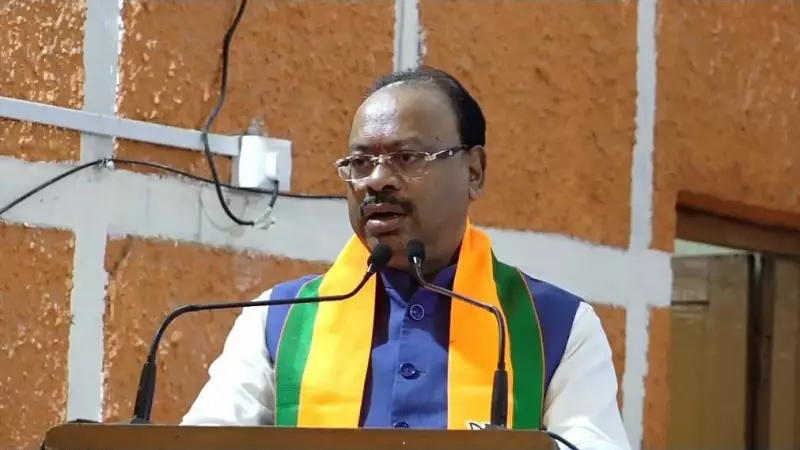
Maharashtra's political landscape is witnessing a fresh controversy ahead of the upcoming municipal corporation elections. State BJP President Chandrashekhar Bawankule has made a significant statement, asserting that candidates winning civic polls unopposed is actually beneficial for democracy.
Thackeray's Appeal to the Election Commission
Bawankule's remarks are a direct response to the recent actions of Shiv Sena (UBT) chief Uddhav Thackeray. Thackeray has formally appealed to the State Election Commission (SEC) to take a drastic step. He has demanded the cancellation of election results in 68 civic wards where candidates from the ruling Mahayuti alliance were declared winners without a contest.
These unopposed victories occurred in the run-up to the crucial January 15 municipal corporation elections. Thackeray accompanied his appeal with a stark warning, cautioning that the foundational principles of democracy must not be overrun by what he termed "mobocracy." This strong language underscores the deepening political rift in the state.
Bawankule's Counter-Argument for Democracy
In his defense of the unopposed wins, Chandrashekhar Bawankule presented a contrasting viewpoint. He framed the situation not as a subversion of democratic process, but as a potential sign of its strength. The BJP leader suggested that when a candidate is so widely accepted or their victory seems so inevitable that no opponent steps forward, it can reflect a consensus within the constituency.
This perspective positions the ruling alliance's uncontested gains in a positive light, arguing it saves state resources and avoids unnecessary electoral friction. However, the opposition, led by Thackeray, views it as a concerning trend that stifles voter choice and could indicate undue pressure or unfair political maneuvering.
Implications for Maharashtra's Political Future
The exchange between these two prominent leaders highlights the intense preparations and pre-poll skirmishes characterizing Maharashtra's local body elections. The demand to cancel results in 68 wards is a major allegation, suggesting a systematic effort to secure wins without a fight.
All eyes are now on the State Election Commission and whether it will act upon Thackeray's appeal. The Commission's decision could set a significant precedent for how unopposed victories are treated in future Indian elections. The outcome of this dispute will likely influence the political narrative and campaigning strategies for the January 15 polls and beyond.
The core debate revolves around a fundamental democratic question: Does an unopposed victory represent the will of the people and a peaceful consensus, or does it signal a failure of the electoral process and a threat to competitive politics? As the election date approaches, this controversy is sure to remain a central talking point.