Study Exposes Alarming Gender Disparity in Bengal's Electoral Roll Deletions
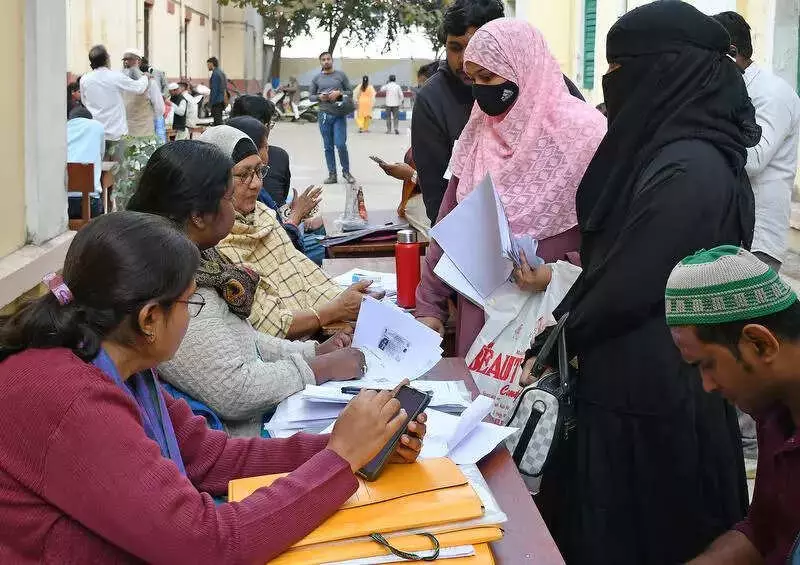
A comprehensive analysis by the Sabar Institute has uncovered troubling patterns in the deletion of female voters from West Bengal's draft electoral roll for 2026. The data reveals that women are being disproportionately removed from voter lists, with systemic issues like post-marital relocation and documentation gaps playing a significant role in this democratic erosion.
Primary Reasons Behind Female Voter Deletions
According to the study, the leading cause for female voter deletions is permanent shifting to other locations, accounting for 43.7% of all cases. This category is closely associated with women relocating after marriage, compounded by the frequent failure of household heads to update official records. Following this, 37.3% of deletions were due to voters being deceased, while 16.5% were classified as untraceable or absent across the state.
Constituency-Wise Breakdown of Deletion Patterns
The research identifies specific assembly constituencies where certain reasons dominate female voter deletions:

- Permanently Shifted: Pandabeswar, Jamuria, Mandirbazar, Dantan, and Nabagram top the list where relocation is the primary factor.
- Death: Sitai, Mekliganj, Katulpur, Sonamukhi, and Keshpur are the constituencies where death emerged as the main reason.
- Untraceable/Absent: Kharagpur Sadar, Entally, Dabgram-Phulbari, Behala Purba, and Kulpi lead in this category.
Documentation Gaps and Socio-Economic Factors
Sabar Institute researcher Souptik Halder emphasized that "a significant share of these deletions is attributed to 'permanently shifted', a reason closely linked to post-marital relocation and the fact that heads of the households frequently do not prioritise updating these records." Co-researcher Sabir Ahamed added that historically, women possess fewer formal documents such as land records or caste certificates, making them more vulnerable to deletion from electoral rolls.
The study highlights concerning statistics: only 41.8% of women had passed matriculation or secondary education according to Census 2011. Furthermore, women constitute just 20.5% of state employees and 27.5% of IAS officers in West Bengal. This means most women are less likely to hold documents like Madhyamik certificates or proof of government employment, which are often required for the Summary Revision of electoral rolls.
Kolkata-Specific Findings and Overall Gender Disparity
In Kolkata, the pattern differs slightly: 35% of female voter deletions were due to being untraceable or absent, followed by 31.4% for death and 31.8% for permanent shifting. The top five assembly constituencies in Kolkata and adjoining areas with the highest proportion of female voter deletions are Metiabruz, Rajarhat New Town, Behala Purba, Bidhannagar, and Kasba, where the average share of female deletions reaches 49.3%.
Overall, the study reveals a stark gender imbalance: of the total names deleted from the draft roll, 53.6% are women, compared to only 46.5% men. This indicates that women are being removed from electoral rolls at a higher rate than their male counterparts.
Criticism of the Electoral Roll Revision Process
Political analyst Udayan Bandyopadhyay criticized the current Summary Revision exercise, stating it is being conducted from a patriarchal viewpoint. He noted that women, especially from poor backgrounds and marginalized sections, are the worst sufferers. "Considering the social reality of the entire country, this exercise should be simplified," Bandyopadhyay urged, calling for reforms to ensure more inclusive voter registration processes.
The Sabar Institute's findings raise serious concerns about how documentation gaps, marriage-linked migration, and administrative lapses are silently erasing women from democratic participation in West Bengal. The study underscores the urgent need for policy interventions to address these systemic barriers and protect women's right to vote.