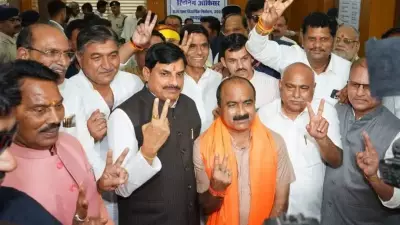
The West Bengal government has officially declared June 20 as 'West Bengal Day', commemorating a pivotal moment in the state's history. The announcement was made by Chief Minister Mamata Banerjee, who highlighted the significance of the date in the context of Bengal's partition in 1947. Prime Minister Narendra Modi is expected to attend the inaugural celebrations, signaling the national importance of the event.
Historical Significance of June 20
June 20, 1947, marks the day when the Bengal Legislative Assembly voted on the partition of Bengal, leading to the creation of West Bengal as a separate state. The decision was a result of the Mountbatten Plan, which also led to the partition of India. On that day, the assembly members from the Hindu-majority areas voted in favor of joining the Indian Union, while those from Muslim-majority areas opted for East Pakistan, which later became Bangladesh.
Why This Date Matters
The declaration of June 20 as West Bengal Day is seen as an effort to honor the state's unique identity and its journey post-independence. The day serves as a reminder of the sacrifices made during the partition and the resilience of the people of West Bengal. The government plans to hold cultural events, exhibitions, and educational programs to highlight the state's rich heritage and contributions to the nation.

Prime Minister Narendra Modi's presence at the celebrations underscores the central government's support for the initiative. This move is also viewed as a step toward fostering unity and acknowledging the historical events that shaped modern India. The event is expected to feature speeches, performances, and a tribute to the victims of the partition.
The West Bengal government has urged all citizens to participate in the celebrations, which will be held across the state. Schools and colleges will organize special assemblies, and government buildings will be illuminated in the state's colors. The decision has received mixed reactions, with some political parties questioning the timing and intent, but the ruling party maintains that it is a non-political move to celebrate the state's culture and history.