

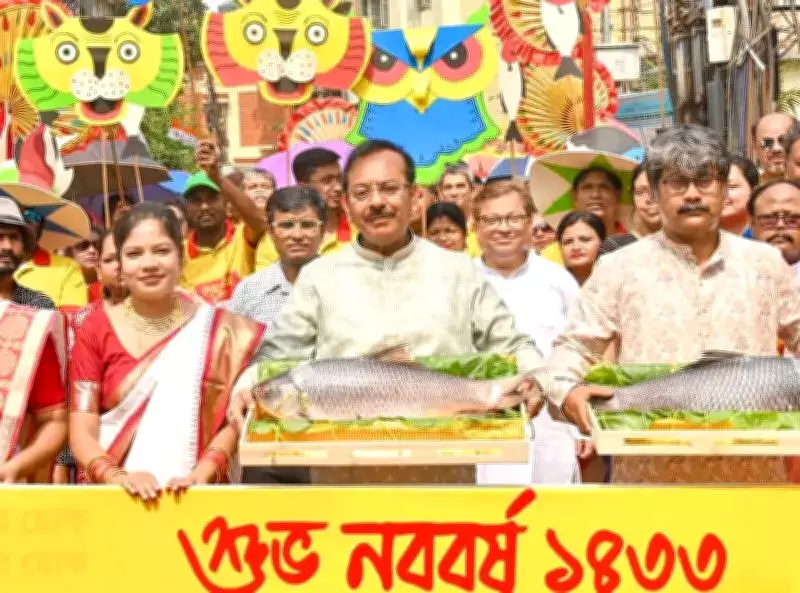
Bengali New Year Campaigns: Political Rallies Embrace Bangaliana Over Traditional Tactics
In a vibrant departure from conventional electioneering, the first day of the Bengali New Year, Poila Baisakh, saw political candidates across Kolkata immersing themselves in cultural festivities to connect with voters. Instead of the usual door-to-door canvassing or standard rallies, the focus shifted decisively to Bangaliana—the essence of Bengali culture—with activities ranging from temple visits to colorful processions and traditional addas.
Trinamool Congress Candidate Aroop Biswas Leads Cultural Rally
Trinamool Congress candidate from Tollygunge, Aroop Biswas, set the tone by organizing a lively rally where he donned traditional pajama-panjabi attire. Participants carried placards adorned with Bengali motifs, and Biswas himself held a fish on a decorated plate, symbolizing the deep-rooted connection between Bengali sentiment and culinary staples. "We are maachhe-bhaate Bangali (fish and rice make a Bengali)," he declared, using the moment to critique BJP-ruled states where fishermen face alleged mistreatment. "Today we eat fish; however, in BJP-ruled states, fishermen are being beaten up and fish is being thrown onto the streets. So, this is a form of protest, where local councillor Sandip Das and I were invited."
BJP Candidates Unite for Roadshow After Puja at Firingi Kalibari
On the other side, BJP candidates from four north Kolkata constituencies—Tapas Roy from Maniktala, Prakash Ojha from Jorasanko, Purnima Chakraborty from Shyampukur, and Santosh Pathak from Chowringhee—commenced their day with a puja at Firingi Kalibari before launching a grand roadshow. Opposition leader Suvendu Adhikari, contesting from Bhowanipore and Nandigram, spearheaded the event. According to north Kolkata district president Tamoghno Ghosh, the rally was infused with cultural elements like dhak drums, Rabindrasangeet songs, and Rabindranritya dances to welcome the New Year, while also paying homage to icons like Swami Vivekananda and Netaji Subhas Chandra Bose.

Other Political Figures Engage in Symbolic Acts and Addas
Koustuv Bagchi, another participant, echoed the fish symbolism by carrying one during his rally and chanting the slogan, "Kheye maach-bhaat ratdin — BJP ke vote din," translating to "Eat fish and rice every day, vote for BJP on election day." Meanwhile, Shyampukur candidate Sashi Panja opted for a more intimate approach, joining a Baithaki adda at ward 19 as part of the Poila Baisakh celebrations. During her interactions, Panja emphasized Bengali pride and cultural heritage, questioning societal discrimination. "When a child is born, he or she does not know in which soil, family or religion the child is taking birth. If there is no discrimination during birth, why will there be any discrimination afterwards?" she remarked.
Left Candidates Mark the Day with Unity Rallies and Sweet Treats
Most Left candidates observed the occasion with ‘Prabhat Pheri’—morning processions—to herald the Bengali New Year. South Dum Dum candidate Mayukh Biswas organized a rally titled ‘Oikyer Poila’ to promote unity in his constituency. In Uttarpara, Left candidate Minakshi Banerjee spread cheer by greeting children and distributing sweets, adding a personal touch to the political outreach.
Overall, the day highlighted how political campaigns in Kolkata are increasingly leveraging cultural symbolism and festive spirit to resonate with the electorate, moving beyond traditional electoral strategies to embrace the rich tapestry of Bengali identity.






