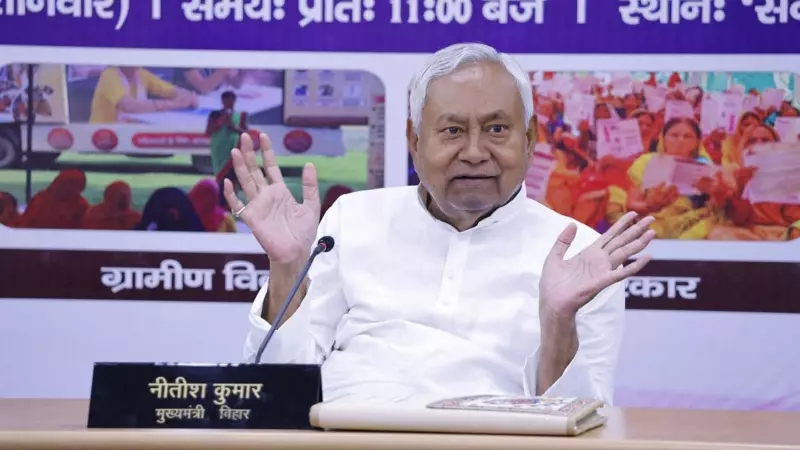
The Bihar Cabinet made a landmark decision on Tuesday, officially clearing the path for construction of the long-stalled Indrapuri Reservoir Project. This move comes after the cabinet endorsed a crucial water-sharing agreement with neighboring Jharkhand, effectively ending a decades-long administrative impasse.
Breaking the Deadlock
Arvind Kumar Chaudhary, Additional Chief Secretary of the Cabinet Secretariat Department, announced the decision during a post-cabinet briefing. The cabinet, chaired by Chief Minister Nitish Kumar, approved 43 agenda items in total, including two important Bills.
The key approval came for the Water Resources Department's proposal to sign a Memorandum of Understanding with Jharkhand. This agreement follows the Central Water Commission's endorsement of the draft document.

"With the approval of this agreement, the construction of the Indrapuri Reservoir Project can now move forward," Chaudhary confirmed to media representatives.
Historical Context and Resolution
The reservoir project has remained in limbo since Bihar's bifurcation in 2000. Following the creation of Jharkhand as a separate state, disputes over water sharing from the Sone River prevented any progress on the project.
According to the 1973 Bansagar agreement, undivided Bihar received an allocation of 7.75 million acre-feet of water from the Sone River. After the division, Jharkhand sought its share of this allocation but lacked a formal arrangement, leading to the deadlock.
The breakthrough finally came during the 27th Eastern Regional Conference held in Ranchi on July 10, 2025. At this conference, officials reached a settlement that divides the water allocation between the two states.
Under the new agreement, Bihar will receive 5.75 million acre-feet of water, while Jharkhand gets 2.0 million acre-feet. This resolution removes what officials described as "a major administrative hurdle" that had blocked the project for years.
Irrigation Benefits
The Indrapuri Reservoir Project promises significant agricultural benefits for southern Bihar. Once completed, it will strengthen irrigation facilities across eight districts:
- Bhojpur
- Buxar
- Rohtas
- Kaimur
- Aurangabad
- Patna
- Gaya
- Arwal
This irrigation boost comes at a critical time for Bihar's agricultural sector, which forms the backbone of the state's economy.
Other Cabinet Decisions
The cabinet meeting yielded several other important approvals beyond the reservoir project:
Private Investments: Three private investment proposals worth over ₹400 crore received approval. The most notable involves Logipark Patna Pvt Ltd, which will establish a pipes and fittings manufacturing unit along with a logistics park and warehouse facility in Vaishali district. This ₹104 crore project is expected to create 500 direct jobs.
Infrastructure Development: The cabinet sanctioned ₹138.82 crore for acquiring 50 acres of land near Darbhanga airport to construct a logistics park and cargo hub. Additionally, ₹255.38 crore was approved for installing 9,073 CCTV cameras across 53 state jails.
Program Supervision: The government's 'Saat Nishchay-3' programme will now come under the supervision and monitoring of the Bihar Vikas Mission.
Advocate Welfare: A ₹30 crore allocation was approved for the Bihar Advocates Welfare Trust Committee. This includes a ₹5,000 monthly stipend for newly enrolled advocates and funds for establishing e-libraries.
Additional Approvals: Other significant decisions included ₹653 crore for laying underground electric cables and SCADA-DMS works in Patna, ₹314.20 crore for constructing Bihar Bhawan in Mumbai, and ₹142 crore for land acquisition related to the Patna Ring Road project under the Bharatmala scheme.
The comprehensive nature of these approvals demonstrates the Bihar government's focus on infrastructure development, job creation, and administrative efficiency across multiple sectors.