Patna: Chief Minister Samrat Choudhary on Tuesday announced the establishment of a sugar mill in Siwan district and instructed the district magistrate to identify suitable land for the project.
Government's First 60 Days
Addressing residents at a Sahyog Shivir held at Panchayat Bhawan in Papaur under Pachrukhi block, Choudhary said his government had taken several important decisions during its first 60 days in office. Responding to criticism over the pace of his administration, he emphasized the urgency aimed at accelerating Bihar's development. “Some people ask why I am in such a hurry. I tell them that to make Bihar prosperous, neither will I sleep nor will I let anyone else sleep,” he told the gathering.
Vision for Development
Choudhary stated he was working to fulfill Prime Minister Narendra Modi's vision of a “Viksit Bharat” and former CM Nitish Kumar's dream of a “Samriddh Bihar”. He said the Sahyog Shivir initiative had strengthened accountability in the administration and enabled local-level resolution of public grievances.

Application Disposal and Employee Accountability
According to the chief minister, more than 3.03 lakh applications have been received at Sahyog Shivirs across the state, of which over 2.61 lakh have been disposed of. He said first show-cause notices had been issued to 8,942 government employees in cases where applications remained pending for 10 days. Second show-cause notices were issued to 153 employees, while a third show-cause notice was served on one official.
Project Inauguration and Beneficiary Distribution
During the programme, the CM inaugurated and laid the foundation stone for 38 projects worth Rs 180 crore for Siwan district through remote mode from the venue. He also distributed symbolic cheques and certificates to beneficiaries of schemes such as the Mukhyamantri Udyami Yojana, Student Credit Card Yojana, Ayushman Card programme, and ex-gratia assistance.
Direct Interaction with Public
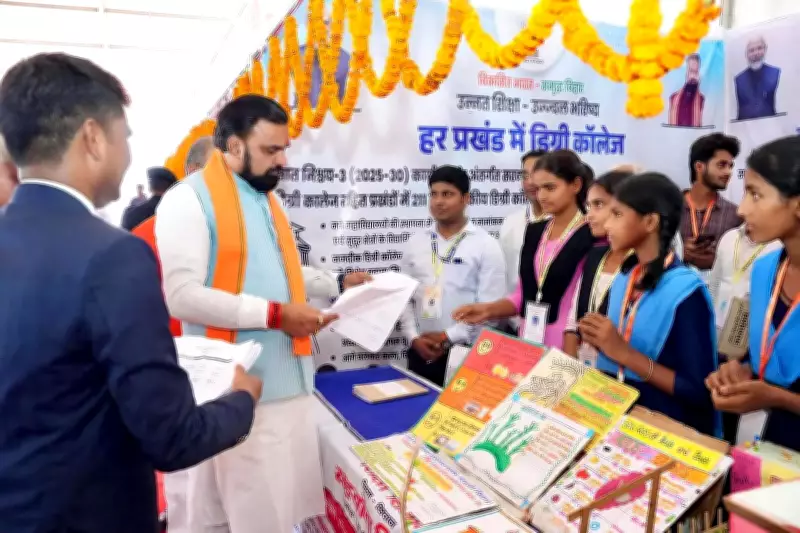
Earlier, after inaugurating the camp, the CM interacted with people who had arrived with complaints and applications. He read their petitions, heard grievances, and directed officials to take action. During an inspection of the ‘shivir’, he asked residents about local issues and their welfare, while reviewing arrangements made for grievance redressal at the venue by officials there.