

Bihar's Prohibition Paradox: Smugglers' Ingenious Methods to Transport Liquor
In the dry state of Bihar, where prohibition laws have been strictly enforced, the illegal liquor trade has not disappeared but rather transformed into a more creative and clandestine operation. Smugglers are constantly innovating, turning everyday objects and vehicles into unlikely conduits for alcohol transportation, demonstrating remarkable ingenuity in circumventing enforcement measures.
Vehicles Transformed into Mobile Smuggling Units
One of the most frequently misused modes of transport has been ambulances, which typically enjoy less scrutiny from authorities. Several significant seizures have been made from such vehicles, including a recent case earlier this month in Hajipur where enforcement agencies recovered 108 bottles of liquor from an ambulance. In another notable incident from a few years ago, an ambulance belonging to the Sadar Hospital in Buxar was discovered being used to transport illegal alcohol.
SUVs have also emerged as a preferred choice for smugglers, with police uncovering vehicles that have been extensively altered to create hidden compartments. These modifications include:

- Concealed spaces in modified rooftops
- Hidden compartments in undercarriages
- Specially created cavities within vehicle structures
Unconventional Transportation Methods
In one particularly bizarre case from April this year, the Railway Protection Force made a startling discovery aboard the Anand Vihar-Raxaul Satyagrah Express. Passengers noticed liquid dripping from the roof of a sleeper coach, which led to an inspection revealing approximately 20 bottles of liquor hidden inside the ceiling compartment. The narrow overhead space had been converted into a temporary storage area for the illegal consignment.
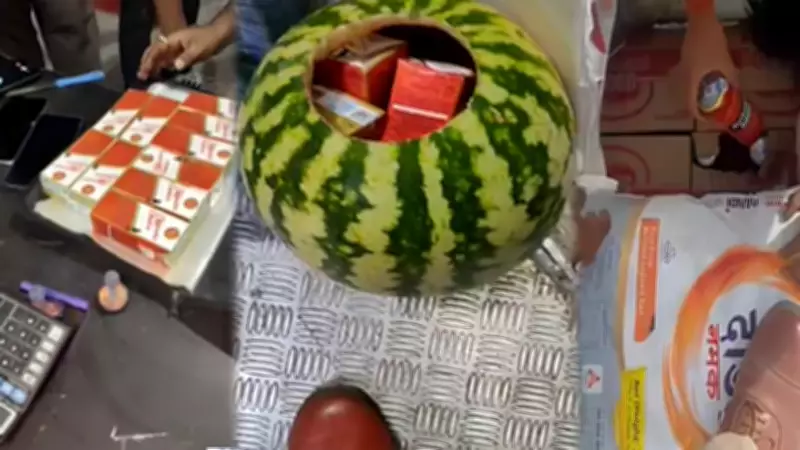
During the same month, police at Sonepur station were astonished to find liquor bottles neatly placed inside watermelons. Bootleggers had carefully hollowed out the fruits, creating sufficient space to conceal tetrapacks of alcohol within the natural containers.
Historical Smuggling Techniques
The creativity of Bihar's liquor smugglers has evolved over time. In January 2018, authorities intercepted an oil tanker coming from Haryana in Gopalganj district that was being used to transport liquor into the state. The large vehicle provided ample space for concealing substantial quantities of alcohol.
In May of last year in Nawada, police made another unusual discovery when they found 19 bottles of foreign liquor hidden inside a motorcycle's fuel tank. To keep the bike operational, the smugglers had installed a separate fuel container under the seat, demonstrating both technical skill and planning.
During the initial period after prohibition was enforced, modifying LPG cylinders became a common transportation method. Smugglers would cut open the bottom of the cylinders to create hollow chambers capable of hiding multiple bottles of liquor.
Enforcement Challenges and Responses
The repeated discoveries of these creative smuggling methods highlight both the persistence of the illegal liquor trade and the adaptability of those involved. Even under strict prohibition laws, smuggling networks continue to evolve, experimenting with increasingly unconventional methods to stay ahead of enforcement agencies.
ADG (Prohibition) Amit Kumar Jain acknowledged that bootleggers often rely on "out-of-the-box" ideas to transport alcohol. However, he asserted that an increasingly strong police network has prevented many such attempts from succeeding.
"We have informers, intelligence inputs and people also inform us through letters, WhatsApp or by calling us," Jain explained. "Definitely it is challenging for us, but over the years, our network has become stronger and more seizures are being made."
The ongoing cat-and-mouse game between smugglers and enforcement agencies continues in Bihar, with each side adapting to the other's tactics. While prohibition remains officially in place, the creative methods employed by those determined to circumvent the law reveal the complex reality of enforcing such policies in practice.






