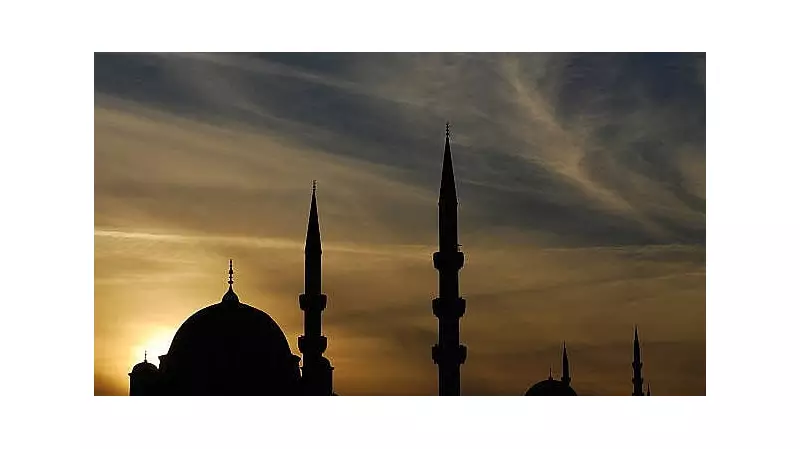
A fresh political controversy has erupted in the Karnataka Legislative Assembly, with members of the ruling Congress and the opposition Bharatiya Janata Party (BJP) engaging in a heated exchange over the use of loudspeakers for the Islamic call to prayer, or Azaan.
The Core of the Controversy
The debate was triggered by BJP MLA Arun Kumar, who raised the issue of alleged noise disturbance caused by loudspeakers from mosques. According to reports from December 16, 2025, Kumar asserted that residents were suffering due to the high volume but were afraid to lodge official complaints. He claimed this fear stemmed from a perception that the practice had the backing of the state government, leading to inaction by the authorities.
Accusations and Political Sparring
"No one dares to complain about the disturbance caused by 'Azaan' because they believe the government supports it," Kumar was quoted as saying, encapsulating the BJP's charge against the Congress-led administration. This allegation framed the issue not merely as one of noise pollution, but of perceived partisan support for a particular community's religious practices over the peace of the general public.
The statement immediately drew sharp reactions from Congress members, leading to a war of words on the Assembly floor. The Congress legislators likely countered by accusing the BJP of communalizing a civic issue and of targeting religious minorities, a common refrain in such political clashes. The debate highlighted the deep-seated political and social fault lines in the state.
Broader Implications and Context
This incident is not isolated. The use of loudspeakers for religious purposes, be it Azaan from mosques or bhajans from temples, has been a recurring point of contention across India, often intersecting with politics, law, and community sensitivities. The Karnataka clash brings to the fore several key questions:
- Enforcement of Noise Pollution Rules: The Supreme Court and various state governments have existing guidelines restricting loudspeaker use, especially during night hours. The debate questions the uniformity and impartiality of enforcing these rules.
- Political Narrative: Such issues are frequently leveraged to consolidate respective vote banks, with parties positioning themselves as protectors of either religious freedom or citizens' right to peace.
- Social Harmony: At its heart, the dispute tests the delicate balance between religious expression and the fundamental right of citizens to a noise-free environment.
The Assembly session on December 16 thus became another flashpoint, reflecting the ongoing national discourse where local civic issues are amplified into significant political battles. The outcome of this sparring and whether it leads to any policy review or stricter enforcement remains to be seen.