

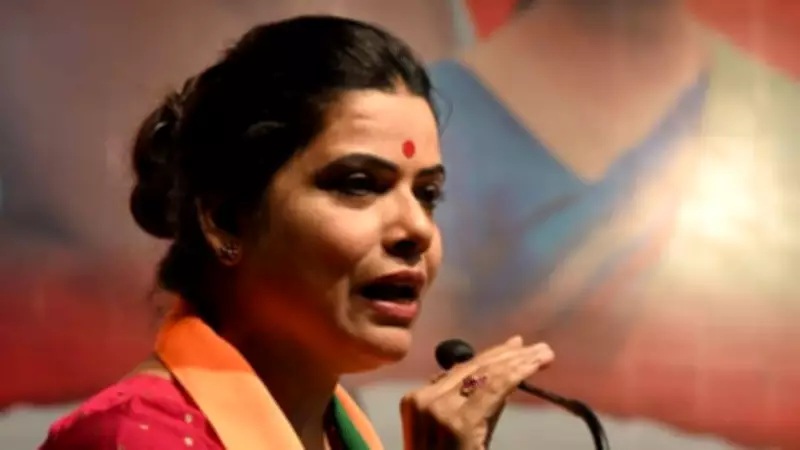
BJP Assumes Control of Mumbai's BMC, Confronts Major Civic Challenges
As the Bharatiya Janata Party takes charge of the Brihanmumbai Municipal Corporation, India's wealthiest civic body, with Ritu Tawde elected unopposed as mayor, the party faces significant hurdles in both political management and administrative execution. This marks a pivotal shift from the past 25 years of undivided Shiv Sena dominance, where the BJP played a secondary role.
A New Era of Coordination and Policy Development
Unlike previous administrations where decisions were confined to the civic body, this regime change promises enhanced coordination between the Maharashtra Government and the BMC. This partnership aims to develop broader policies and programs to realize Mumbai's long-awaited transformation, moving beyond the limitations of isolated civic governance.
The foremost challenge for Mayor Ritu Tawde is to earn the trust and goodwill of Mumbaikars. Her predecessor, Shiv Sena (UBT)'s Kishori Pednekar, demonstrated that the mayoral role is far from ornamental, responding proactively to crises like floods and building collapses, thereby redefining the position's purpose and significance.

Setting a Corruption-Free Example
The BJP's campaign heavily criticized the alleged corruption during the Shiv Sena regime, targeting issues from desilting of the Mithi River to road contracts. Maharashtra Chief Minister Devendra Fadnavis emphasized the party's greater responsibility post-victory, stating, "We have to ensure corruption-free administration in BMC."
A newly elected corporator, speaking anonymously, highlighted the internal pressures: "We have to set an example through work individually. When you are in power, there will be temptations. How well to avoid falling prey to these will be our litmus test." The competition for representation in key committees between the BJP and Shiv Sena underscores the struggle to control BMC's substantial finances.
Addressing Mumbai's Persistent Issues
Despite numerous policy initiatives over the years, corruption allegations have persistently plagued the Mumbai civic body. Basic urban problems, including potholes and waste management at dumping yards, remain unresolved, causing daily hardships for residents.
Beyond rectifying these fundamental amenities, the larger goal of transforming Mumbai requires significant impetus from the state government. Restoring the city's image as India's international financial capital and preserving its cosmopolitan character present daunting tasks. Fadnavis acknowledged this during pre-election interactions, stressing that "The cosmopolitan character of Mumbai cannot be compromised."
While the BJP focuses on mega infrastructure projects to demonstrate commitment to improving Mumbaikars' lives, it has been critiqued for overlooking critical social issues like growing communal clashes and caste-based polarization.
Navigating a Strong Opposition
Although the BJP emerged as the largest party in the BMC with 89 corporators, it faces a robust opposition. The Shiv Sena (UBT) holds 65 seats, Congress 24, MNS 6, SP 2, AIMIM 8, and others 13, totaling 118 opposition members against the ruling alliance's 121 (BJP 89, Shiv Sena 29, NCP 3).
The Shiv Sena (UBT) has already protested deviations from established norms, such as BMC Commissioner Bhushan Gagrani handing over the mayoral charge instead of the outgoing mayor. A senior BJP minister with BMC experience noted, "How effectively our newly elected corporators perform needs to be seen. The litmus test will be the performance inside and outside BMC."
With experienced leaders and seasoned corporators, the Shiv Sena (UBT) appears well-prepared to assume the opposition mantle, ensuring the BJP will encounter frequent protests and scrutiny in the coming days.
Historical Context and Future Prospects
In the 2017 BMC polls, the BJP narrowly trailed the undivided Shiv Sena by just two seats, a significant leap from 33 seats in 2012 to 82 in 2017. Despite this, the party opted to play a "paharekari" or watchman role, ceding key posts to its coalition partner. This decision drew criticism from some quarters who felt the BJP compromised its rights for political stability.

Nine years later, the BJP has achieved its goal of securing power independently in the BMC. The party now faces the dual challenge of delivering on its promises while managing a vocal opposition, setting the stage for a critical period in Mumbai's civic governance.





