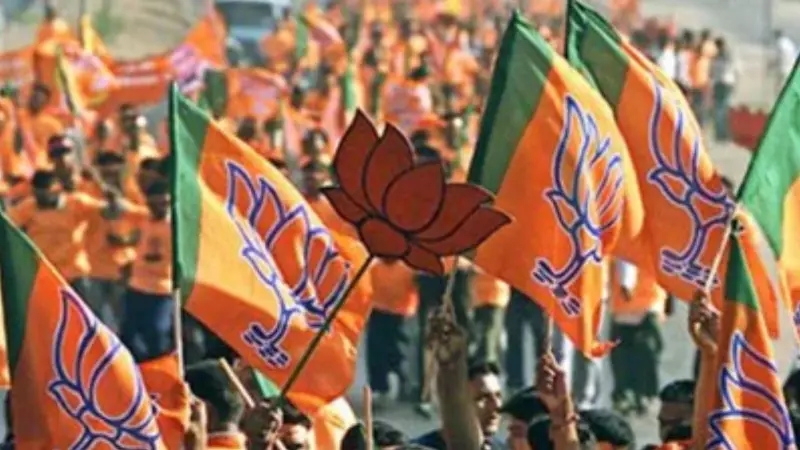
The Bharatiya Janata Party (BJP) in Maharashtra is confronting a significant internal challenge, a direct consequence of its rapid expansion and political dominance. As the state prepares for elections in 29 municipal corporations on January 15, 2026, the party is battling widespread discontent and protests from its own ranks in at least 20 of these civic bodies. The core issue is the allocation of election tickets to new entrants from other parties, sidelining longtime loyal workers, a move that has sparked open rebellion in strongholds like Nagpur and Nashik.
Widespread Protests and Resignations Rock Party Strongholds
The scale of the unrest is substantial. The BJP has fielded 337 candidates across the 29 corporations, contesting in an alliance with other Mahayuti constituents in 15 of them. While the absolute number of new faces given tickets may not be overwhelming, their concentration in key districts has ignited fierce backlash. Nanded leads with 45 such candidates, followed by Solapur and Jalna with 30 each, Navi Mumbai with 28, Pune with 25, and Nashik with 24. In Mumbai, 15 "outsiders" have received tickets.
The resentment has manifested in dramatic protests. In Nagpur, the home turf of Chief Minister Devendra Fadnavis and Union Minister Nitin Gadkari, 42 office-bearers resigned in protest. The situation in Nashik turned particularly volatile on December 30, when local leaders denied tickets chased the district president and barged into his farmhouse, necessitating additional police deployment at the BJP office.
Other districts witnessed similar scenes. In Chhatrapati Sambhajinagar, workers gheraoed minister Atul Save and MP Bhagwat Karad. Solapur saw former ministers Subash Deshmukh and Vijay Deshmukh publicly criticize the party's approach, warning of "serious consequences" for ignoring loyalists.
The "Problem of Plenty" and Leadership's Balancing Act
Senior party functionaries acknowledge this as a "problem of plenty." With the BJP becoming the preferred destination for politicians across Maharashtra after its landslide win in the 2024 Assembly elections, the leadership faces pressure to accommodate newcomers while retaining its core base. A senior leader revealed that the directive is to win "each and every election and each and every seat," forcing strategists to employ all methods for quick success, including inducting electorally promising figures from rival camps.
This has led to criticism within, with state BJP president Ravindra Chavan being labelled by some as the "pravesh adhyaksha (induction chief) and not the pradesh adhyaksha (state chief)." A longtime Mumbai BJP worker, who spoke anonymously, captured the sentiment of many loyalists: "We came to the party when nobody believed it would see power... Now, when we are in power, we have to continue rolling out the red carpet for outsiders."
Damage Control and the Road Ahead
In response to the escalating crisis, Chief Minister Devendra Fadnavis deployed ministers and senior leaders to placate angry aspirants and rebels. However, public statements from leaders attempt to downplay the turmoil. BJP minister Girish Mahajan, the poll in-charge for Nashik, claimed the problem was not as extensive as portrayed, asserting that maximum preference is always given to original workers. Senior minister Chandrashekhar Bawankule echoed this, stating that while accommodating everyone is impossible, the party will give every worker their due in the organisation.
Despite these assurances, the internal strife presents a complex test for the BJP's electoral machinery just days before the polls. It highlights the inherent tension between the party's high ambitions for complete dominance and the need to manage the expectations of its foundational cadre. The outcome of the January 15 elections will be a crucial indicator of whether the strategy of accommodating outsiders pays off or if the cost of success weakens the party's grassroots structure.